
Last updated November 23, 2026
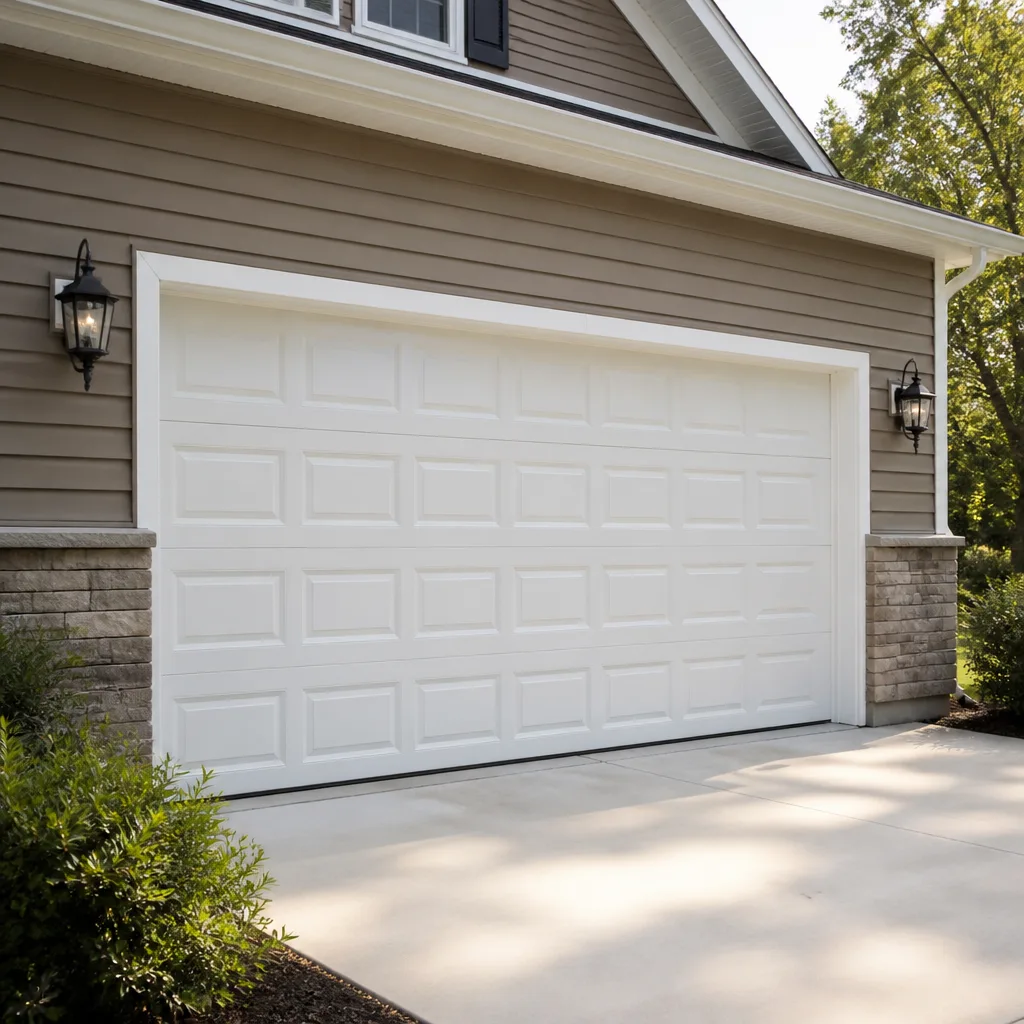 Raised-panel steel
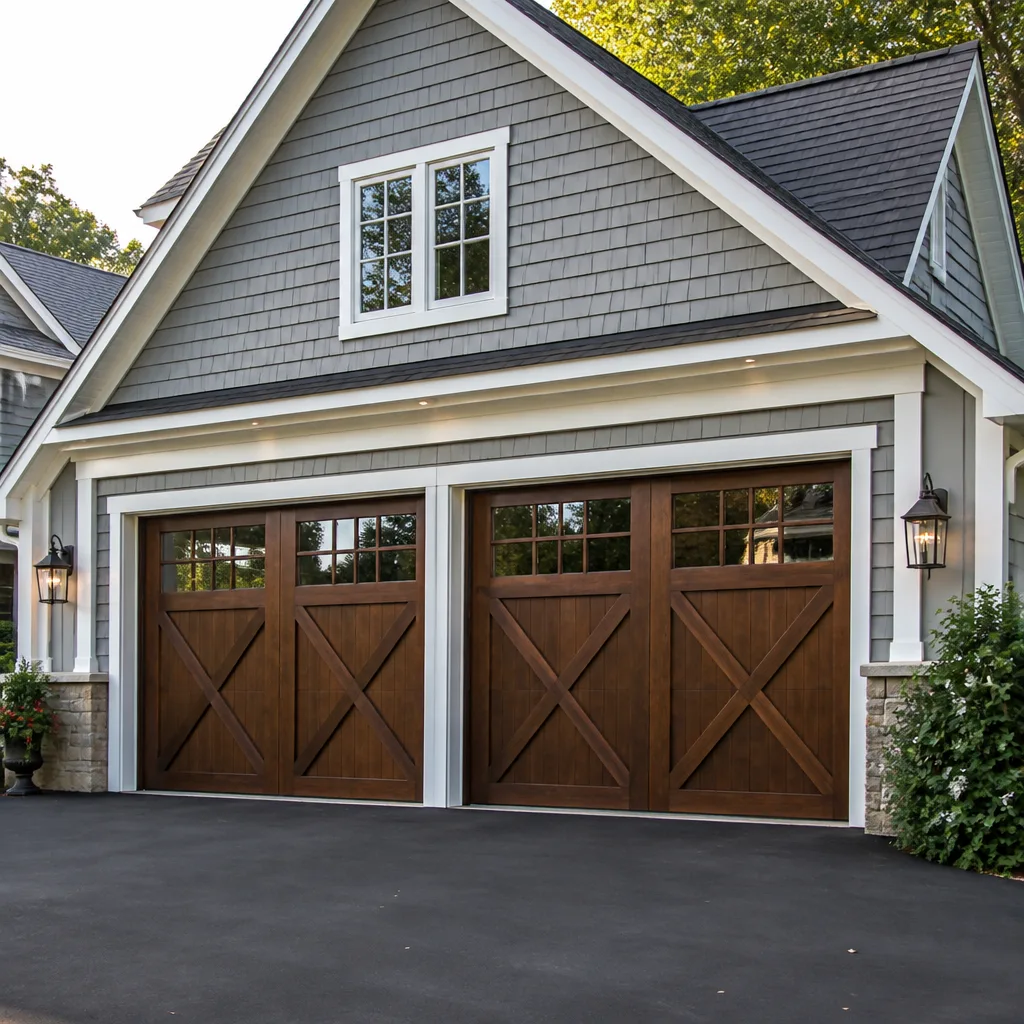 Carriage house
 Modern flush
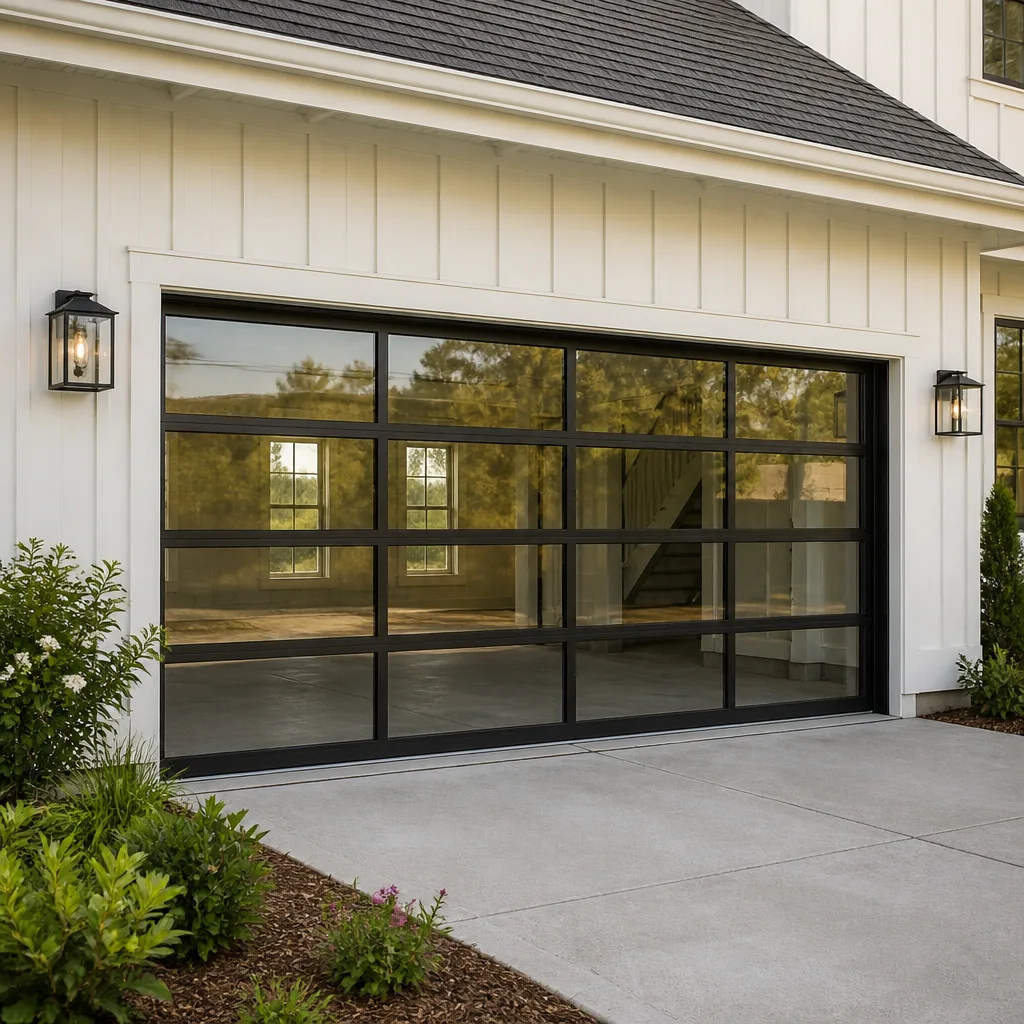 Full-view glass
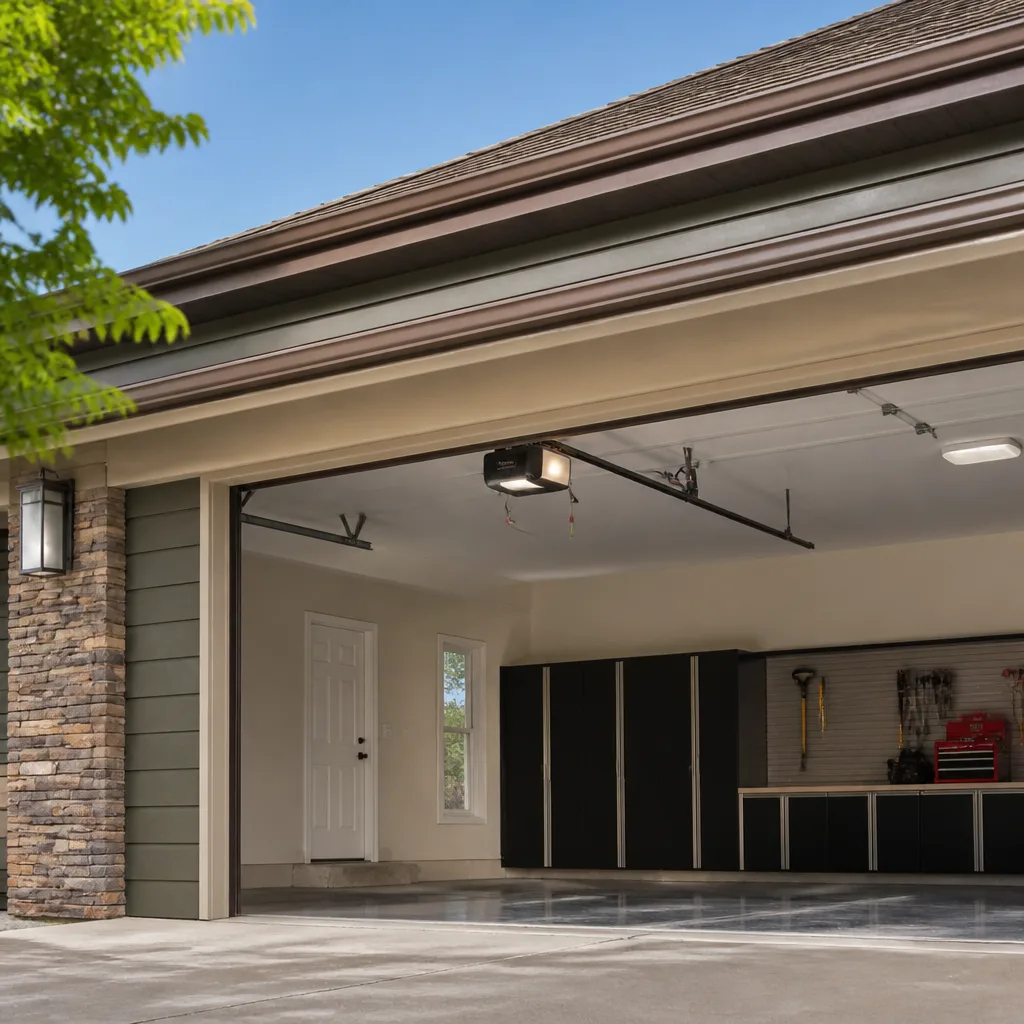 LiftMaster openers
 Chamberlain openers
Full 25-point door and opener safety check with every visit - springs, cables, rollers, tracks, and your LiftMaster or Chamberlain opener included
You get a price before we start. It does not change when the pro arrives.
Get your free estimateHow to Hire a Garage Door Contractor in Leesburg: A Step-by-Step Guide
The worst garage door hire in Leesburg usually isn’t a stranger in an unmarked truck. It’s a legitimate-looking company with a clean website and a friendly phone voice that quietly sends an uncertified subcontractor, installs off-brand hardware labeled as name-brand, and disappears the moment a warranty claim shows up. Most homeowners never check what’s behind the name until something breaks twice. This guide walks through the vetting steps that catch those outfits before they touch your door: license checks, quote red flags, subcontractor questions, address verification, and how to lock down a written scope of work. By the end, you’ll know exactly how to hire a garage door contractor in Leesburg without the guesswork.
Quick Answer
To hire a garage door contractor in Leesburg, verify the company’s Class A, B, or C license on the Virginia DPOR database, confirm they carry a real Loudoun County business address, ask whether the technician arriving is a direct employee or a subcontractor, and insist on a written scope that names spring gauge, cable diameter, and opener model before work begins. Skip any step and you’re gambling on parts quality and warranty coverage. A legitimate contractor will answer every one of those questions without flinching.
Styles & brands we work with
- Raised-panel steel
- Carriage house
- Modern flush
- Full-view glass
- LiftMaster openers
- Chamberlain openers
Table of Contents
- Why “Local” Garage Door Companies in Leesburg Often Aren’t
- How to Verify a Virginia Contractor’s License on the DPOR Database
- Red Flags in a Garage Door Quote: Vague Line Items and Hidden Substitutions
- Employee or Subcontractor? The Question That Protects Your Warranty
- What a Real Loudoun County Business Address Tells You
- How to Write a Scope of Work That Locks In Parts and Models
- The 7-Step Hiring Process, Start to Finish
- When to Call a Professional
Why “Local” Garage Door Companies in Leesburg Often Aren’t
Search for garage door repair in Leesburg and you’ll get a screen full of results that look like neighborhood businesses. Many of them aren’t. National lead-aggregator sites build landing pages for every zip code in the country, dress them up with local place names, and then sell the inquiry to whichever contractor answers the phone first. The “company” you called doesn’t employ the technician who shows up. It may not even know who that technician is until a text message goes out.
This matters most in a service category like garage doors, where the difference between a proper repair and a repeat failure often comes down to parts quality and installation standards. Aggregators have no stake in either. They get paid whether the spring lasts or fails in eight months.
A few signs you’re looking at an aggregator:
- The site lists a service area covering half of Northern Virginia with no physical address anywhere on the page.
- There’s no named company behind the site, just a phone number and a generic “we serve Leesburg” claim.
- Pricing pages quote “average national costs” with no reference to the local market.
- The contact form asks for your email before it asks for your problem.
The fix is simple. Cross-check any lead-gen result against the Virginia DPOR database (more on that below) and call the company directly instead of filling out a form. A real Leesburg contractor will have a license number, a physical address, and a person who can answer technical questions about your specific door.
How to Verify a Virginia Contractor’s License on the DPOR Database
Virginia doesn’t hand out garage door licenses as a specialty category. Garage door work falls under general contractor licensing through the Department of Professional and Occupational Regulation (DPOR), which means the company doing the work should hold a Class A, Class B, or Class C license depending on the size of the jobs it takes. A Class C license covers projects under $10,000; Class B covers $10,000 to $120,000; Class A covers above $120,000. For most residential garage door repairs and single-door installs, a Class C or Class B is enough. For a large custom installation or a multi-door project on a Leesburg commercial property, ask for Class A.
Running the check takes about three minutes:
- Go to the DPOR license lookup tool on the state website.
- Search by the company name or license number the contractor provides.
- Confirm the license is active, not expired or suspended.
- Confirm the license class matches the size of your job.
- Check whether the company has any disciplinary actions on record.
Ask for the license number early in the conversation, not after you’ve signed. A class of license can’t be faked on a printed quote once you’ve verified it against the state. Some homeowners skip this because it feels bureaucratic. In our experience, the companies worth hiring are the ones who volunteer the number before you ask. That willingness tells you something the database can’t.
If you’re comparing bids from three contractors, verify all three. It’s a five-minute exercise that filters out more bad hires than any review site. And it matters more in a category like spring work, where a garage door spring repair done by an uncertified hand isn’t just a warranty risk – it’s a genuine safety hazard.
Red Flags in a Garage Door Quote: Vague Line Items and Hidden Substitutions
The most common trick in a garage door quote is line-item vagueness. A bid that lists “spring replacement” for one flat price without naming the spring gauge, wire diameter, or manufacturer is a bid that lets the contractor swap in whatever’s cheapest at the supply house that morning. That’s how you end up with a spring rated for a much lighter door, or an off-brand cable that fails inside a year. The quoted price looks fine. The work behind it doesn’t.
Watch for these specific red flags:
- “Hardware” as a line item. Hardware means everything from hinges to rollers to a $4 bracket. A real quote names which parts, which brand, and how many.
- “Labor” as a single line. This is legitimate if the labor scope is described separately, but a quote with nothing but “labor: $X” tells you nothing about what’s actually included.
- No brand names anywhere. A quote that says “opener” without specifying Genie, LiftMaster, Chamberlain, or another brand is a quote for whatever’s on sale.
- Prices that undercut everyone else by 30 percent or more. Genuine parts cost roughly the same everywhere. A bid that’s dramatically low is using substandard components or planning to add charges later.
- No written warranty on the quote. Labor and parts warranties are separate. If neither is written down, neither exists.
- Verbal-only pricing. “I’ll have to see it first, then I’ll tell you” is fine for a real diagnosis. A verbal ballpark followed by a surprise invoice isn’t.
- “We’ll match any quote.” Matching a competitor’s price often means matching the competitor’s parts substitution.
If you’re calling garage door repair and the person on the phone can’t tell you which LiftMaster model they’d install for your door size, that’s the red flag waving early. A contractor fluent in the brands they service can talk through model choices before they’ve seen the door. That fluency is worth more than a low bid.
Ask for the quote in writing. Ask for the brand and model of every part. Then compare line for line against the other bids.
Employee or Subcontractor? The Question That Protects Your Warranty
This is the question almost nobody asks, and it’s the one that separates a warranty you can actually use from one that expires the moment the wrong person shows up.
When a company sends a direct employee to fix your door, that employee is trained to that company’s standards, follows their procedures, and works under their warranty. When a company subcontracts the job to an independent installer, that installer may not have any relationship with the manufacturer’s warranty program, may not use the parts the quote specified, and may have no obligation to come back if something fails six months later. The company that took your call can claim they sent “a technician.” The warranty language is what gets complicated.
Ask these questions before you book:
- Is the technician who will arrive an employee of your company or a subcontractor?
- If subcontractor, are they insured independently, and can you see that coverage before work starts?
- Who is responsible for the labor warranty if the parts fail within the warranty period?
- Is the technician certified to service the specific brand of door and opener I have?
- Will the same technician handle any follow-up warranty work, or will it be someone new?
Direct employees, especially ones trained on a specific set of brands, are the safer bet for warranty enforcement. Our technicians have up to 8 years of experience across all eight major residential brands – LiftMaster, Chamberlain, Genie, Clopay, Amarr, Wayne Dalton, Craftsman, and Raynor – which means the person who shows up for a Clopay door knows the Clopay procedures, and the person handling a Genie opener knows the Genie controls. That fluency doesn’t come from a general handyman picking up the work on the side.
If a company won’t answer the employee-versus-subcontractor question clearly, treat that as your answer. A legitimate outfit knows exactly who’s coming to your house.
What a Real Loudoun County Business Address Tells You
A P.O. box in another county and a physical Loudoun County address mean very different things for how accountable a contractor is.
Garage door work isn’t a “drop in and out” service. It’s location-sensitive because of the response time, the parts availability, and the accountability that comes from actually operating in the area. A company based in Fairfax or Prince William can absolutely cross into Leesburg and do the work – but the questions of who responds when something fails and how fast they can get back are worth asking before you sign.
Here’s what a legitimate Loudoun County address signals:
- Response time is plausible. A business operating from a real local address can deliver a faster follow-up than one routing through a call center three counties away.
- Accountability is traceable. You can look the business up, show up at the location if there’s an issue, and know there’s an actual operation behind the name on the invoice.
- Warranty enforcement is real. When something fails inside the warranty period, a local address means the follow-up call goes to the same company, not to a routing desk.
- Parts sourcing is stable. A local operation works with the vendors who supply the parts it uses. That means fewer substitutions mid-job.
Verify the address before you book. Cross-reference it against the DPOR record and against the business listing on Google. If the “office” turns out to be a mailbox, that doesn’t automatically disqualify the company – but it does mean you should ask who actually shows up and what warranty language applies if they don’t.
The verification process is quick and the payoff is that you skip the outfits that route work to whoever answers first. For a garage door opener repair on a smart-home-connected unit, the person who arrives needs the right diagnostic tools and the correct factory procedures. That’s not always a job any directory result can fill.
How to Write a Scope of Work That Locks In Parts and Models
A written scope of work is the single most useful document you can ask for before a garage door job starts. It removes every ambiguity that lets a contractor substitute cheaper parts or add charges once the door is up on blocks.
The scope should include, at minimum:
- Spring replacement: wire gauge (typically .207, .218, .225, .234, .243, or .250 for torsion; wire size for extension), inside diameter, length, manufacturer, and whether it’s a matched pair. One spring is a one-spring price; a matched pair is roughly double that. If the quote lists “springs” without gauge, that’s a red flag.
- Cable replacement: cable diameter (typically 3/32″ or 1/8″), length, and whether it’s a lift or safety cable. Cables that fail are a secondary failure, not the primary one – if the quote doesn’t say why the cable needs replacing, ask.
- Roller and hinge work: quantity, material (nylon vs. steel), and model number if the manufacturer specifies one.
- Opener repair or replacement: existing model number, replacement brand and model (Genie, LiftMaster, Chamberlain, or another), belt vs. chain drive, and whether smart-home connectivity is included.
- New door installation: manufacturer, model, panel style, insulation rating, and window inserts if specified.
- Warranty terms: labor warranty duration, parts warranty duration, and what voids either one.
Insist on a signed scope with these items before work begins. Any contractor confident in their work will provide one. Any contractor who “does it all the time” and doesn’t need to write it down is a contractor who’s leaving room to substitute.
Ask for an estimate before the truck arrives. Estimates should be free, and if a company can’t put together a scope of work from a phone call plus a couple of photos, that’s information worth having. This is especially true for a full garage door installation, where the door is ordered and measured – the brand (say, Amarr or Wayne Dalton) and the model get locked in before the work is scheduled, not after.
The 7-Step Hiring Process, Start to Finish
Here’s the complete process in order. Work through it once and every hire from that point forward gets easier.
- Search with intent to verify, not just to find. Use a search to identify candidates, but treat the first page as a starting list, not a final one. Cross-check any result against the DPOR database.
- Confirm the DPOR license. Verify the license class and active status for every company on your short list. Note the license number in your records.
- Ask the employee-versus-subcontractor question. Get a clear answer and note whether the answer changes if the specific job requires a specialist.
- Confirm the physical address. Cross-check the listed address against the DPOR record and against the business’s Google listing. Ask where the parts come from if the address is outside Loudoun County.
- Request a written scope of work. Ask for the document before any work is scheduled. If a candidate resists, that resistance is a warning sign.
- Compare line by line. Sit down with all scopes side by side. Compare parts brands, quantities, and warranty terms – not just the total price at the bottom.
- Book with confirmation in writing. Confirm the scheduled date, the scope, and the warranty in writing before the technician arrives. If a company can’t put it in writing, they’re not the right hire.
The whole process takes about an hour per candidate. That’s less time than a bad repair costs to undo, and far less than the headache of chasing a warranty claim through a subcontractor who’s already moved to the next job. This is the standard we hold ourselves to at Leesburg Garage Door Repair – and it’s the reason our process is built around written scopes, brand-specific parts, and same-day follow-through on the doors we service.
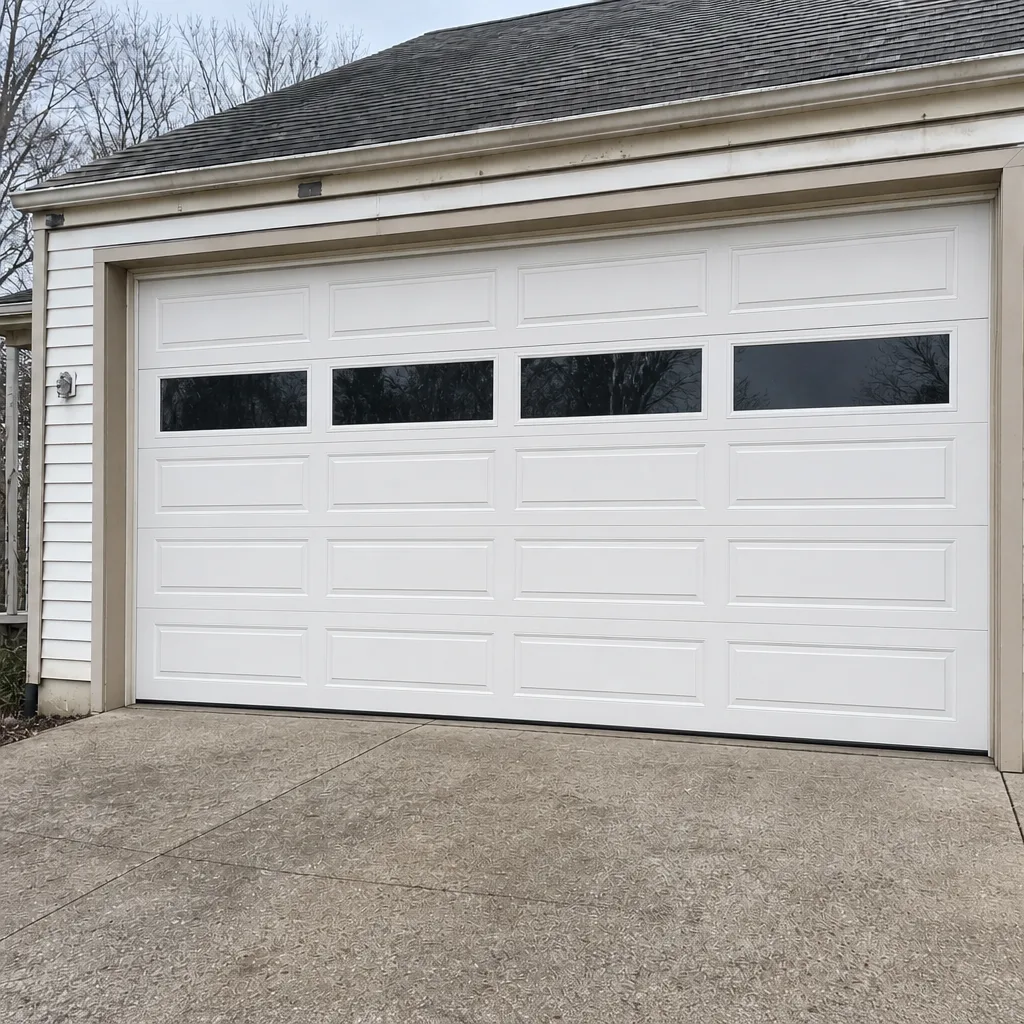
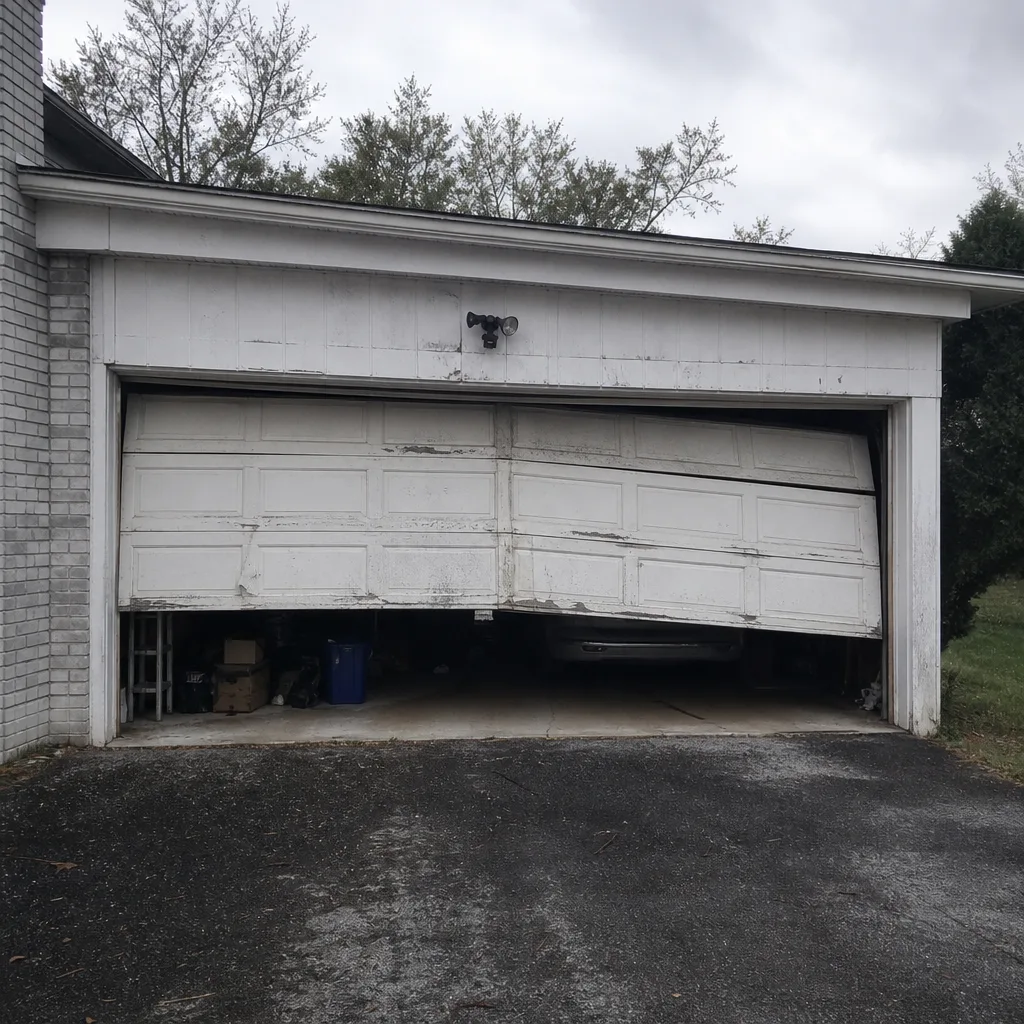
See the difference
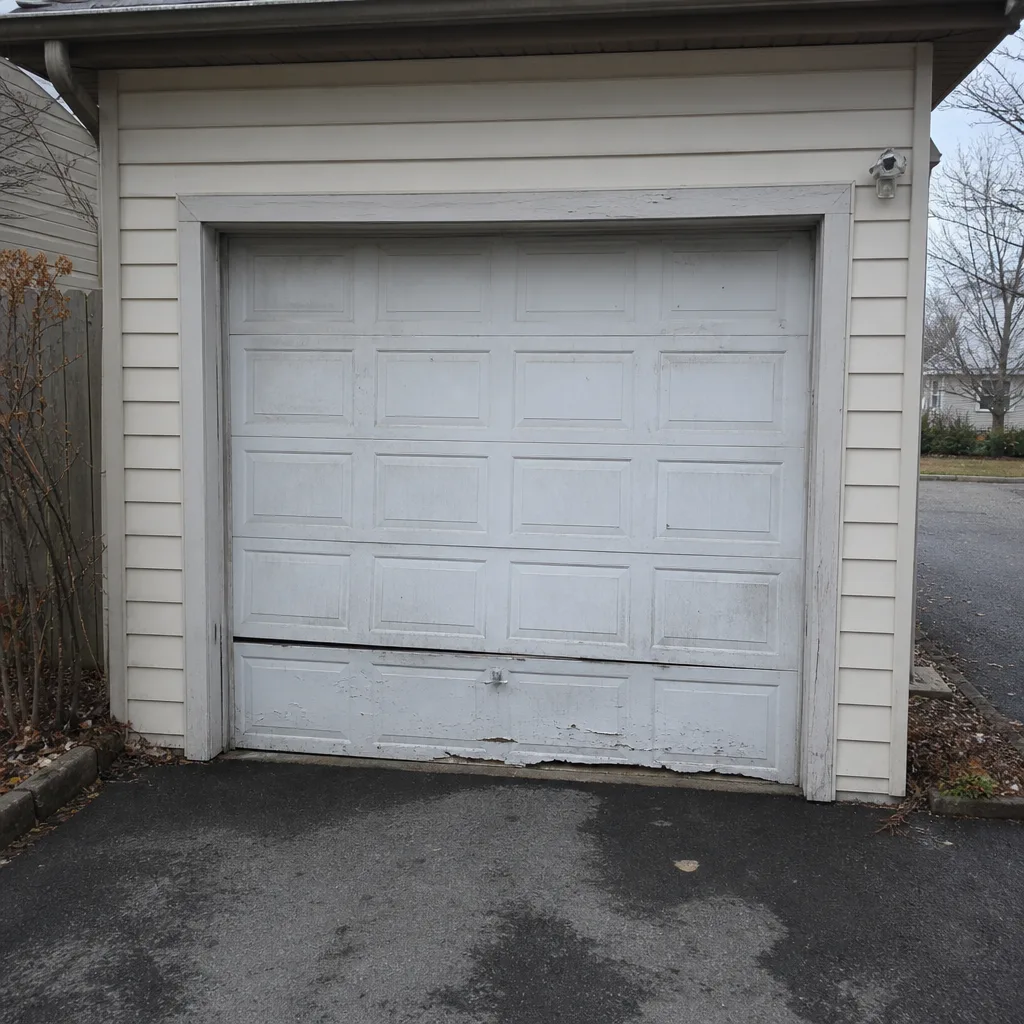 Before
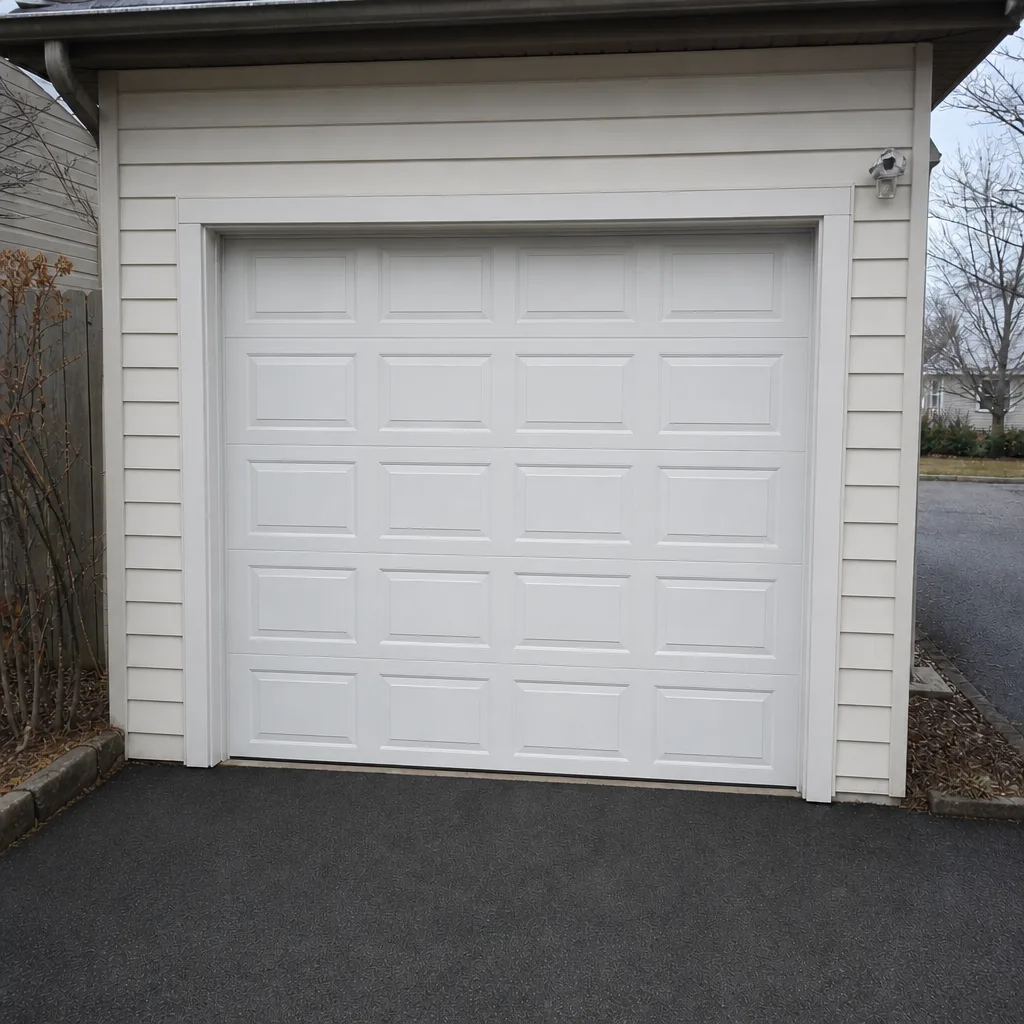 After
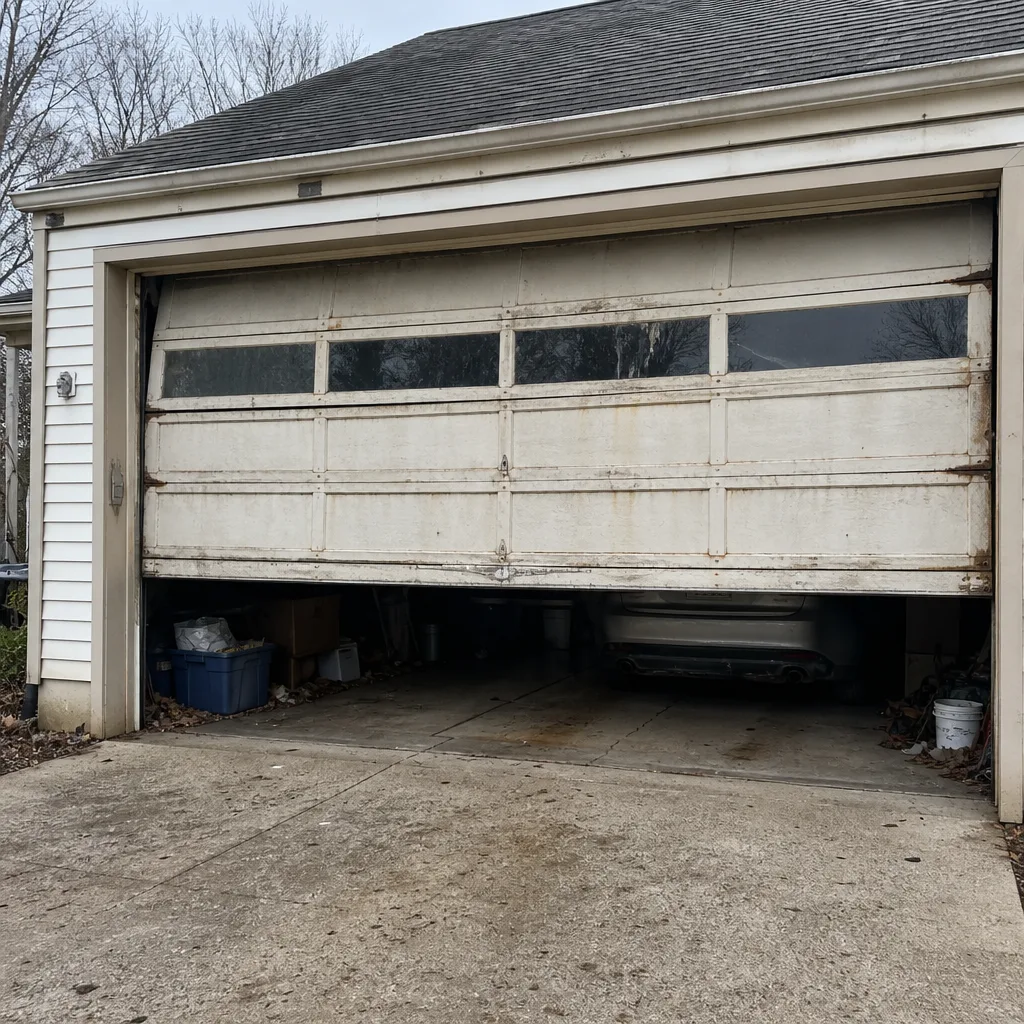 Before
 After
 Before
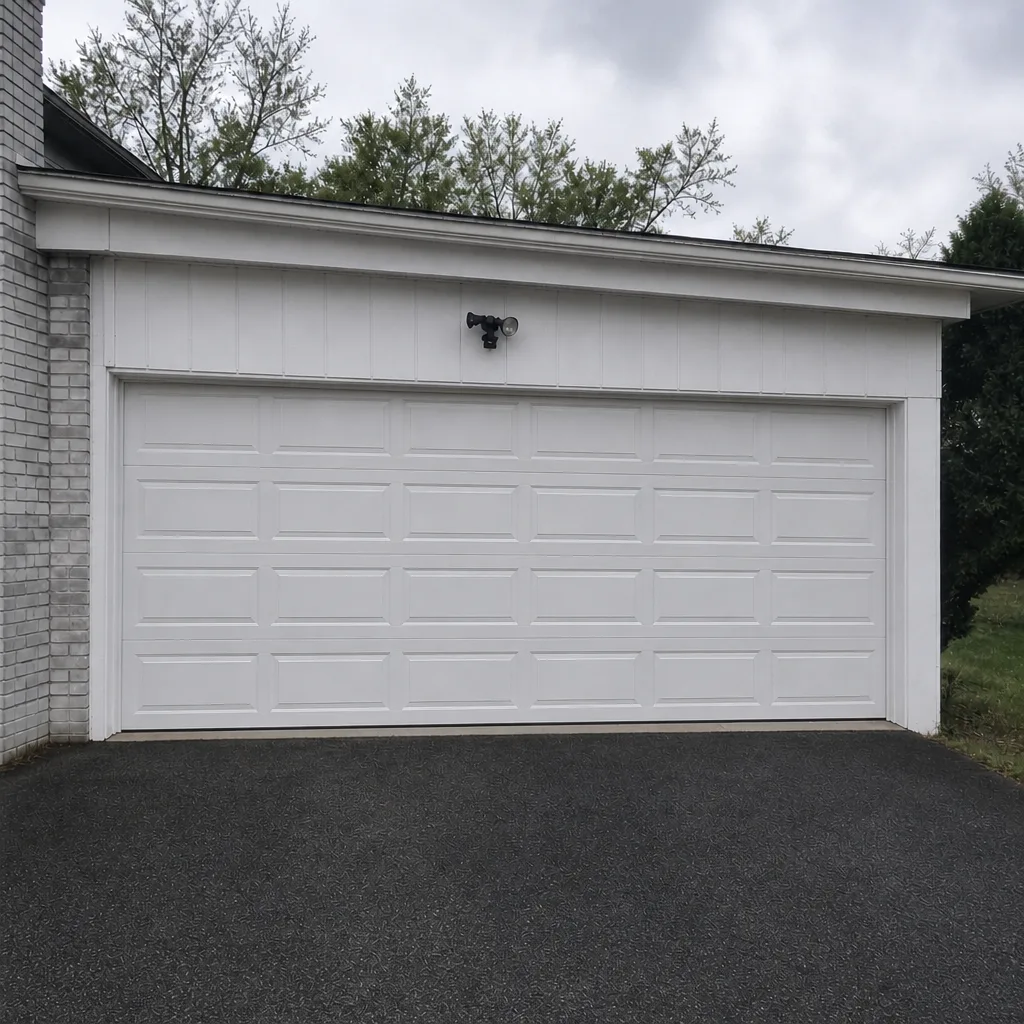 After
Common Mistakes to Avoid
- Hiring on price alone. The cheapest bid is almost always the one using off-brand parts. Twenty bucks in savings on a spring is a warranty you’ll never use.
- Skipping the DPOR check. National directories are full of “licensed” contractors whose licenses expired two years ago. Three minutes on the state site catches them every time.
- Not asking whether the technician is an employee or a subcontractor. The subcontractor might be an excellent installer, or might have no relationship with the manufacturer’s warranty program. You can’t know unless you ask.
- Accepting a verbal estimate. If it’s not on paper, it doesn’t exist. Get the scope, the parts list, and the warranty in writing before anything is scheduled.
- Missing the P.O. box giveaway. An out-of-county P.O. box with no retail address is a signal the business isn’t operating from Leesburg. Ask where the parts come from and who actually shows up.
- Not checking the spring gauge or cable diameter. A quote that says “spring” without a gauge is a quote for whatever’s cheapest in the supply house that day. Insist on the wire diameter in the scope.
- Hiring the same day without confirming the scope. Emergency situations push homeowners into fast decisions. In a genuine emergency, a scope can come together faster than usual – but it still needs to exist before work begins.
Leesburg winters swing cold enough to stress older springs and cables, and the region’s mix of newer construction and older homes means standard residential doors from a range of manufacturers. A contractor who shows up with one set of parts and hopes it fits is a contractor who hasn’t looked at the brand on your door.
When to Call a Professional
Some garage door failures are genuinely dangerous to attempt yourself. Torsion springs store enough tension to cause serious injury when they release unexpectedly. Electrical panels and opener wiring, gas lines in attached garages, and any work at height all carry real risk. For those situations, a trained technician is the right call, not a Saturday project with a YouTube video.
Call a professional for: a snapped torsion or extension spring, a door that’s off its tracks, a door that won’t fully open or close, a cable that’s visibly frayed or hanging, a motor that hums without moving the door, an opener that’s stopped responding to remote or app control, and any situation where the door isn’t secure. A door stuck open is a security issue; a door stuck shut means the car isn’t going anywhere.
Leesburg Garage Door Repair offers free estimates in Leesburg – call (844) 427-1950. We answer 24/7, with fast dispatch from 7am to 7pm, Sunday through Friday. Spring repair is a core specialty here because it’s one of the most mechanically dangerous jobs in the trade, and it belongs in a trained technician’s hands, not yours.
Frequently Asked Questions
Search the company name or license number on the Virginia DPOR license lookup tool. Confirm the license is active, matches the size of your job (Class A, B, or C), and has no disciplinary actions on record. Garage door work isn’t a standalone Virginia license class – it falls under general contractor licensing. Call (844) 427-1950 for an exact quote – estimates are free.
Typical garage door repair in Leesburg runs from around $150 for a minor adjustment up to several hundred dollars for a spring replacement, cable repair, or opener motor replacement. The exact figure depends on the part, the brand, and the door model. Written estimates set the final price before work begins, and the estimate is free. Call (844) 427-1950 for an exact quote – estimates are free.
It shouldn’t. A written estimate is the price. If the technician uncovers something the initial inspection couldn’t see, the price stays the same until you agree to a revised scope in writing. Any contractor who wants to negotiate the number upward after the door is up on blocks is a contractor who didn’t scope the job properly the first time. Call (844) 427-1950 for a written estimate – estimates are free.
Same-day repair is often available for door failures, especially for emergencies like a snapped spring or a door stuck in the open position. We answer 24/7 with fast dispatch from 7am to 7pm, Sunday through Friday. A call outside dispatch hours gets booked into the next opening. Call (844) 427-1950 for an exact quote – estimates are free.
The local pro performing the work is licensed and insured as their state requires, and we verify contractor credentials before any job. Our technicians have up to 8 years of experience across all major residential brands including LiftMaster, Chamberlain, Genie, Clopay, Amarr, Wayne Dalton, Craftsman, and Raynor. Ask for the license number early in any conversation with any contractor. Call (844) 427-1950 for an exact quote – estimates are free.
Call the phone line, which we answer 24/7 – Saturday is the one day we’re closed for dispatch, and the call gets booked into the next opening, Sunday through Friday, 7am to 7pm. Do not attempt to release the spring tension yourself – torsion springs carry real stored energy and a sudden release can cause serious injury. Call (844) 427-1950 for an exact quote – estimates are free.
The Bottom Line
Hiring a garage door contractor in Leesburg comes down to verifying what’s behind the company name, not just what’s on the website. Check the DPOR license. Ask whether the technician is an employee or a subcontractor. Confirm the business address is real and in Loudoun County. Ask for a written scope of work that names the spring gauge, cable diameter, and opener model. Compare line by line. If a contractor can answer all of that in writing, you’re in good hands. If they can’t, the low bid is irrelevant – you’re gambling on parts quality, labor standards, and whether the warranty will actually be honored.
The right hire is the one whose parts match their quote, whose license matches their claim, and whose follow-up reaches the same team that did the work. That’s the standard, and it’s worth asking for before work begins.
Ready to book a written estimate on a repair, opener upgrade, or full door replacement in Leesburg? Call (844) 427-1950. We answer 24/7. Fast dispatch from 7am to 7pm, Sunday through Friday. Free estimates, written scopes, and brand-specific parts before work starts.
Written by the team at Leesburg Garage Door Repair.