
Last updated November 23, 2026
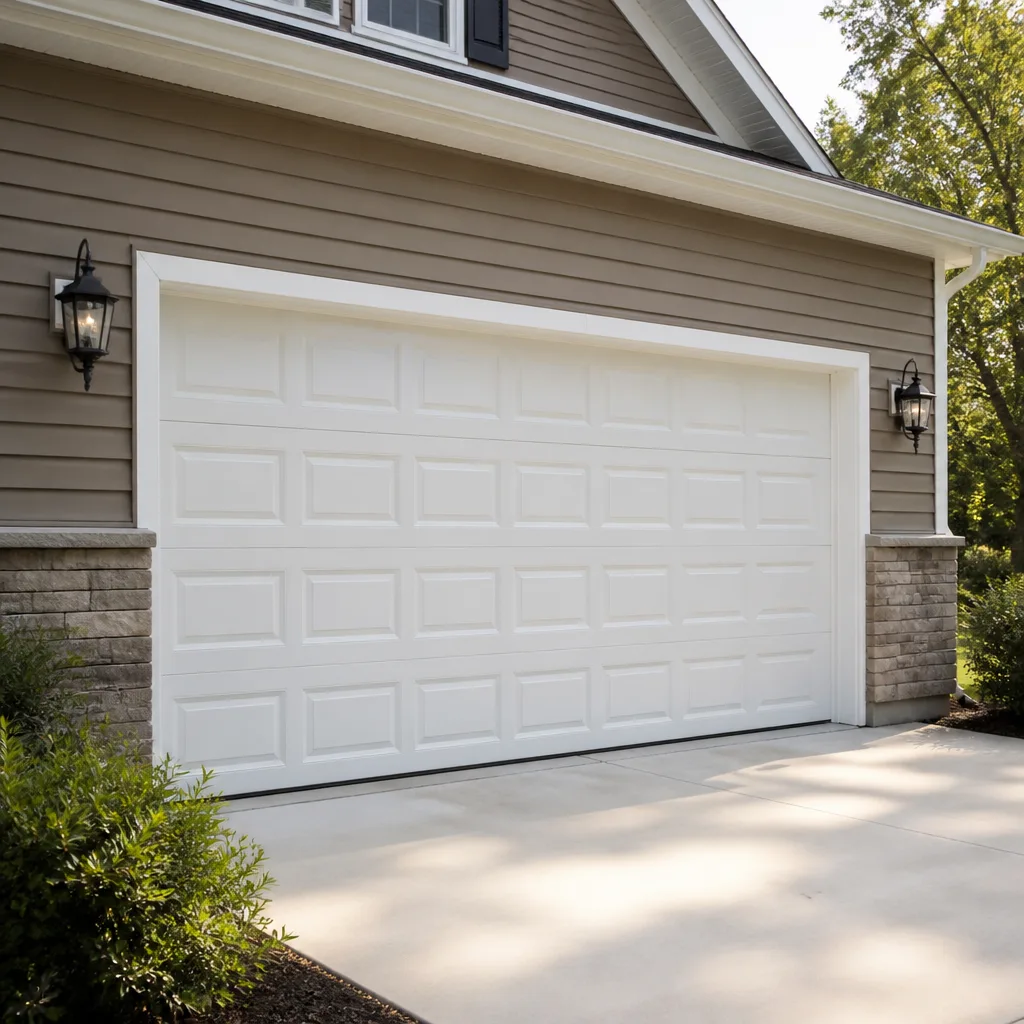 Raised-panel steel
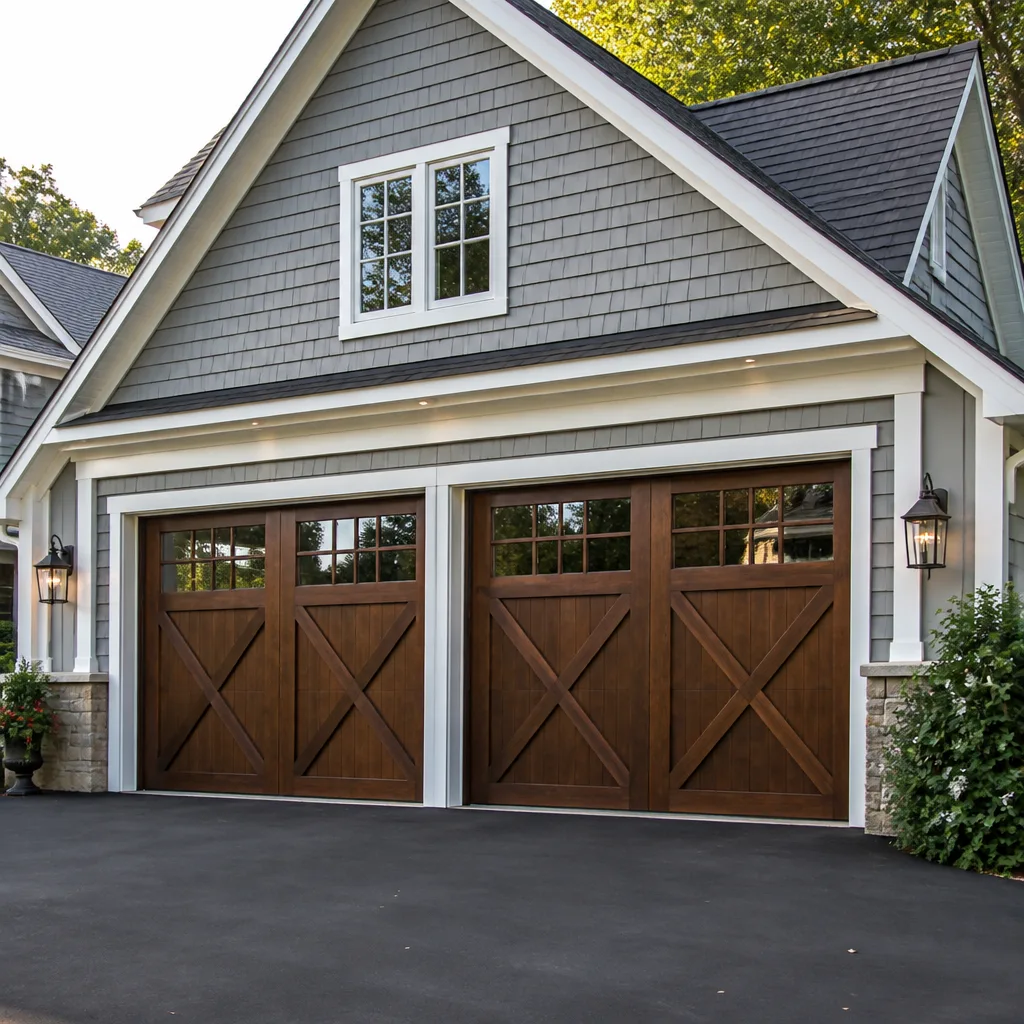 Carriage house
 Modern flush
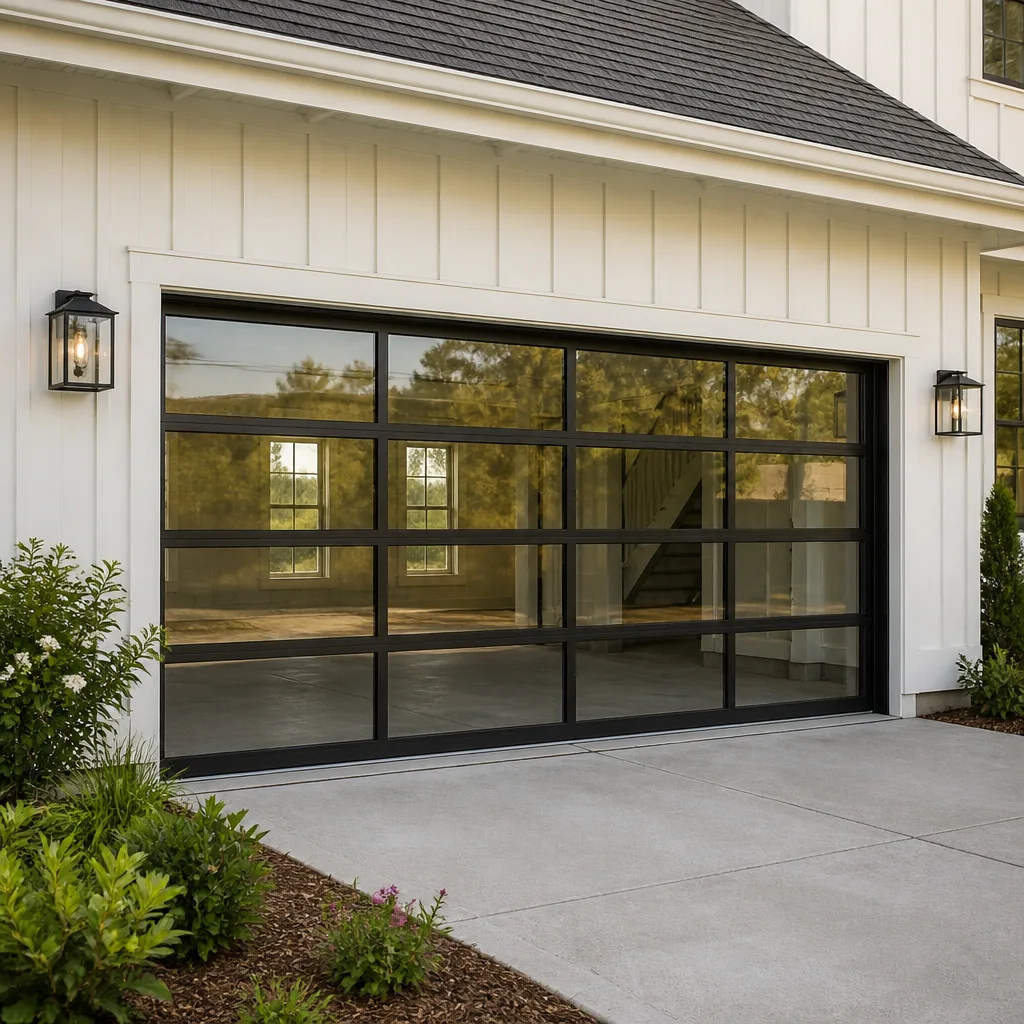 Full-view glass
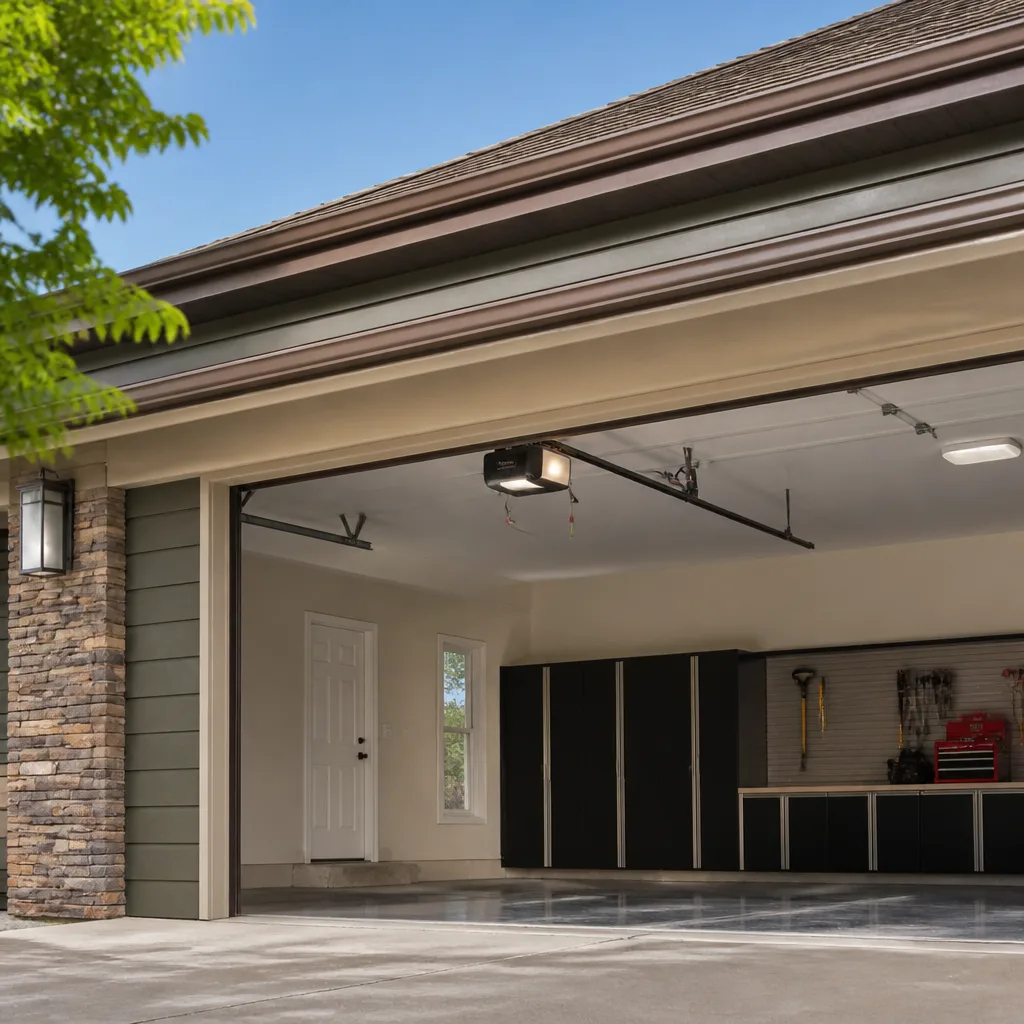 LiftMaster openers
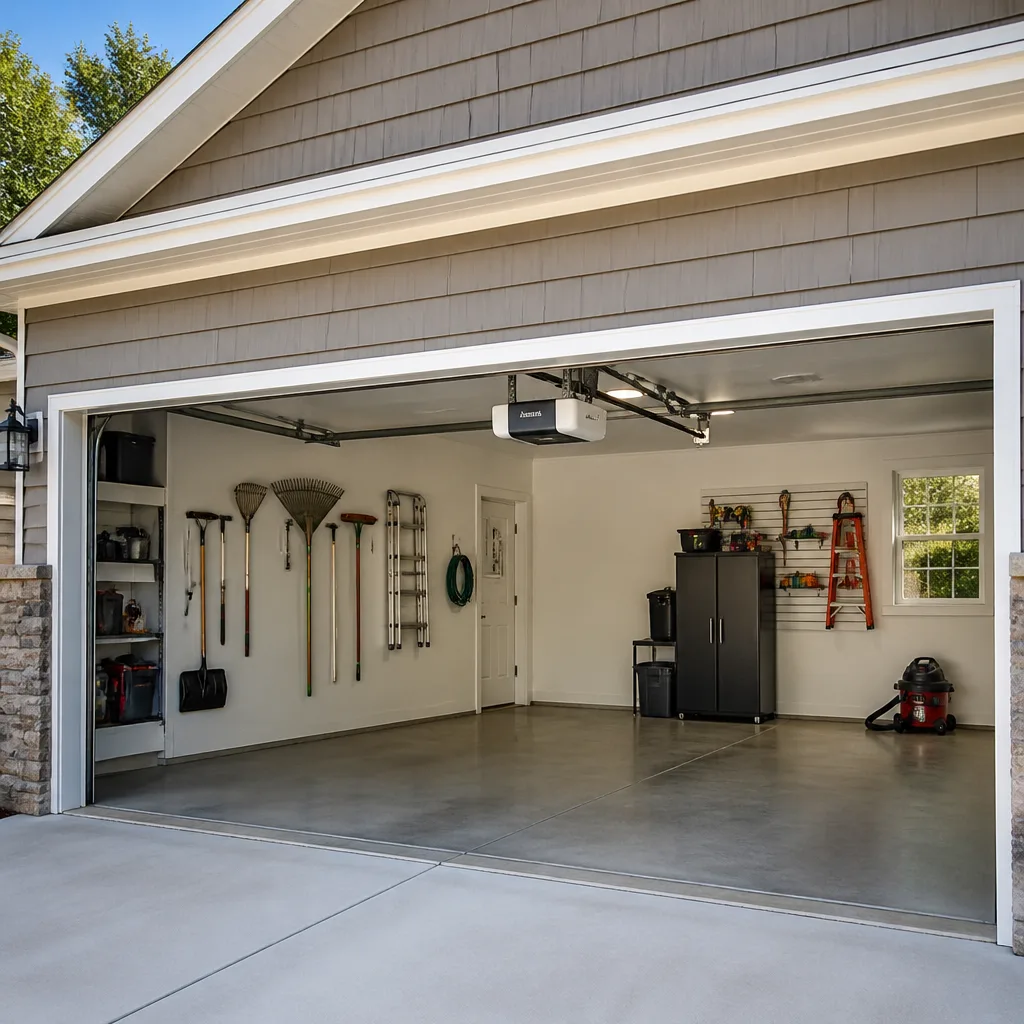 Chamberlain openers
Full 25-point door and opener safety check with every visit - springs, cables, rollers, tracks, and your LiftMaster or Chamberlain opener included
You get a price before we start. It does not change when the pro arrives.
Get your free estimateDIY vs Professional Garage Door: The Leesburg Homeowner’s Decision Guide
Here’s the problem with most garage door repair videos. The part that actually kills people is the part the camera cuts away from. Torsion springs hold enough stored energy to break bones and cause fatal injuries when they let go, and a two-minute tutorial that shows you which winding bar to use never shows you what happens when one slips. That silence leaves homeowners overconfident right at the moment confidence is most dangerous. This guide sorts garage door work into what’s genuinely safe to do yourself and what belongs in trained hands, with the real trade-offs for a Leesburg homeowner deciding how to handle a door that’s misbehaving.
Quick Answer
Sensor alignment, lubrication, weatherstripping, and opener programming are safe DIY jobs. Torsion spring work, cable replacement, and structural header assessment are not – those should go to a trained technician. Everything between the two depends on your tools, your comfort with mechanical work, and what your insurance and local permits allow. Below, we break down each task so you can make a decision you won’t regret.
Styles & brands we work with
- Raised-panel steel
- Carriage house
- Modern flush
- Full-view glass
- LiftMaster openers
- Chamberlain openers
Table of Contents
- The DIY vs. Pro Task Taxonomy
- The Physics of Torsion Spring Tension
- Permits, Code, and Insurance in Leesburg
- Real Cost Comparison: DIY vs. Professional
- When a DIY Attempt Goes Wrong
- The Safe DIY Task Checklist
- Common Mistakes to Avoid
- Frequently Asked Questions
The DIY vs. Pro Task Taxonomy
The DIY question for garage doors isn’t about skill. It’s about which tasks carry real injury risk and which don’t. Sorting every job into one of three buckets is the fastest way to decide whether to reach for your toolbox or your phone.
Safe to DIY (Green Zone)
- Weatherstripping the bottom seal and side seals
- Aligning the safety sensors (the two small lenses at the bottom of the track)
- Cleaning and lubricating hinges, rollers, and tracks with a garage-door-rated lubricant
- Programming a new remote on a LiftMaster or Chamberlain opener
- Tightening loose bracket bolts with a socket wrench
- Replacing the opener’s light bulbs
These tasks need no special tools, and a mistake usually produces a door that still functions – just less smoothly. Sensor alignment is the one that trips up most Leesburg homeowners on a Sunday afternoon. The lens gets nudged, the door reverses halfway down, and fifteen minutes of cleaning and repositioning usually fixes it.
Requires Tools and Experience (Yellow Zone)
- Roller replacement (the door has to come off tension first)
- Cable replacement (the lifting cables, not the torsion springs)
- Panel replacement after impact damage
- Track straightening after a bump
- Opener gear and sprocket replacement
Rollers and cables sit under tension. That’s the key distinction. A homeowner with a spring winding bar, a set of clamps, and a patient afternoon can sometimes handle these jobs – but a slip on the first attempt turns a $150 repair into a $500 repair in a hurry. Genie and Chamberlain openers, in particular, have different gear assemblies, and picking the wrong replacement part wastes both time and money.
Never DIY (Red Zone)
- Torsion spring replacement or adjustment
- Extension spring replacement
- Anything that requires winding the spring to add or reduce tension
- Structural header assessment when the wood frame above the door is cracked, sagging, or rotted
- Door realignment after the door has come off its tracks
These are the jobs where a mistake can put a person in the emergency room and a door on the ground. They belong to trained technicians, not tutorials.
The Physics of Torsion Spring Tension
A torsion spring works like a coiled pendulum. To lift a 150-pound residential door, the spring has to be wound so that it’s constantly pulling upward with roughly that same force. That stored energy is measured in foot-pounds, and the numbers are sobering. A typical garage door torsion spring holds hundreds of foot-pounds of energy when wound – plenty to break a bone or cause a fatal injury if a winding bar slips or a cable lets go under load.
The reason videos skip the danger is simple: nobody wants to film the part where a professional gets hurt demonstrating an unsafe method. So tutorials focus on which direction to turn the winding bar and how many turns a standard seven-foot door needs, and the camera stays far away from the actual moment of risk. Homeowners who watch these videos come away thinking the job is a matter of patience and a couple of tools.
It isn’t. The specific risks are:
- Winding bar slip: When the bar loses grip on the winding cone, the spring unwinds instantly, and the bar becomes a projectile.
- Cable snap under tension: A worn cable holding wound spring energy can let go without warning, sending parts flying.
- Wrong spring rating: A spring from a big-box store labeled for a “standard door” may not match your door’s weight, and the door will either slam or fail to lift.
- Improperly clamped door: If the door isn’t clamped in place before spring work begins, releasing the spring lets the door drop instantly.
In our experience, the failure that astonishes homeowners most is the one that happens on the second or third winding turn – long after they’ve started to feel like they know what they’re doing. That’s why garage door spring repair is one of our core specialties. Our technicians have up to 8 years of experience with torsion and extension springs, including matched pairs, broken-spring replacements, and the sensor and cable work that often goes with a spring failure.
Permits, Code, and Insurance in Leesburg
Virginia doesn’t require a state license for a homeowner doing their own work on their own single-family home, and that’s a genuine advantage for DIY-minded Leesburg homeowners. But permits and insurance are a different story.
What Needs a Loudoun County Permit
Replacing a garage door assembly like-for-like typically does not require a permit in Loudoun County. Structural changes – widening the opening, changing the header, installing a new door in an opening that wasn’t previously a garage door – usually do. If a structural change is part of the plan, call the Loudoun County building department before the work starts. They’ll tell you the exact permit category and the inspection schedule.
If a door was replaced without a required permit, the issue tends to surface at a future home sale. Insurance companies and title reviewers ask for permit history, and a missing permit on structural garage door work can hold up a closing.
Insurance Considerations
Most homeowner policies cover garage door damage from storms, vehicle impact, and vandalism, but not from installation errors. A DIY spring or cable repair that fails and damages the door, the opener, or the vehicle parked underneath is typically treated as a homeowner’s-workmanship exclusion. That means the payout you were expecting doesn’t happen. In our experience working with homeowners in neighborhoods across Leesburg, the fast rule is: if the repair costs more than your deductible and involves tension, have a professional do it so the paper trail supports a claim if something goes wrong later.
Real Cost Comparison: DIY vs. Professional
Every pricing below is an estimate for a typical residential door. The written quote after an on-site measure sets the final price, and it’s agreed before any work starts.
1. Broken Torsion Spring (Single)
- DIY path: Spring $40-$80 + winding bars $30-$60 + risk of injury or door damage. Not recommended.
- Professional: $180-$340 for one spring, including labor and a matched replacement.
A matched pair of springs is replaced together in most cases, so budget roughly double for a pair. Most Leesburg homeowners find the professional path makes sense here not because the spring is expensive, but because the failure mode of a DIY attempt can be catastrophic.
2. Broken Cable
- DIY path: Cable set $25-$50 + tools you may not own. High risk of cable snap during re-tension.
- Professional: $150-$300 per door, including disposal of the old cable.
3. Roller Replacement (Full Set)
- DIY path: Nylon rollers $30-$60. The tricky part is de-tensioning the door – the DIY step most people get wrong.
- Professional: $150-$280 for a full set, including door adjustment.
4. Opener Repair or Replacement
- DIY path: New opener $150-$350, remote programming varies by brand. Wifi and app setup on Chamberlain and Genie models is where most homeowners get stuck.
- Professional: $180-$450 for a repair, $400-$900 for a full replacement including Labor.
5. Weatherstripping (Bottom Seal)
- DIY path: Seal kit $20-$50, an hour of warm-weather work.
- Professional: $100-$200 for a seal replacement.
Weatherstripping is the one job on this list where DIY usually makes sense for a Leesburg homeowner. It’s the same story in most of the trade. Simple work is simple; tension work is dangerous regardless of how much time you have.
When a DIY Attempt Goes Wrong
Some DIY failures are recoverable without extra cost. Others cause cascading damage that makes the professional repair far larger than it would have been on day one.
Recoverable by a Professional
- Wrong spring installed: A technician can measure the door’s weight and swap in the correct spring. Cost is the spring plus labor.
- Winding bar slip with no injury: The door may have dropped partway, the cable may be kinked, but a professional can re-level and re-tension.
- Sensor misalignment made worse: A technician re-aims and tests the sensor in fifteen minutes.
Cascading Damage
- Cable snapped during re-tension: The cable can whip and damage the door panel, the track, and sometimes the opener. Repair jumps from a cable job to a panel-plus-cable-plus-track job.
- Spring wound in the wrong direction: The door becomes unreleasable without careful re-clamping. If the homeowner forces it, the door can slam and bow the bottom section.
- Door dropped off tracks: A mis-tensioned door can come off its tracks and bend the vertical rails, adding $200-$500 to the repair.
- Opener forced into failure: A door that won’t lift because the spring is wrong makes the opener work harder. The motor burns out, and now the bill includes a new opener.
If a DIY attempt goes wrong, stop. Don’t try to force the door down or up. Call for help before you make a recoverable problem into a cascading one. A technician with up to 8 years of experience across the major brands – Clopay, Amarr, LiftMaster, Chamberlain, Genie, Craftsman, Wayne Dalton, and Raynor – can usually tell within a few minutes which category of failure they’re looking at. Emergency response is available for the situations where a door is stuck open (and the house is exposed) or stuck shut (and nobody’s leaving).
The Safe DIY Task Checklist
If you’re going to handle any garage door work yourself, these are the tasks to start with. Work through the list one at a time, and stop the moment something feels wrong.
- Lubricate the moving parts. Use a garage-door-rated lubricant, not WD-40. Spray the hinges, rollers, and the pivot points on the tracks every six to twelve months. In our experience the hinges at the top and bottom corners wear fastest, so give those a second pass.
- Test the safety sensors. With the door open, wave an object between the two sensors at the bottom of the track. The door should reverse immediately. If it doesn’t, alignment is the issue about 90% of the time – clean both lenses and adjust until the small LED on each stays solid.
- Check the balance of the door. Close the door, pull the manual release, and try lifting the door by hand. It should lift with one hand and stay in place at any height. If it falls or rises on its own, the springs are out of balance – call a professional.
- Weatherstrip the perimeter. Run your hand around the door when it’s closed. Anywhere you feel daylight or air, the seal is worn. Bottom seals pop into the track channel and take about twenty minutes to swap.
- Program your remotes. LiftMaster and Chamberlain remotes pair by pressing the learn button on the back of the motor and then holding the remote button. Genie remotes use a slightly different sequence – check the manual.
- Tighten the roller brackets. Use a socket wrench on the bolts that hold the roller brackets. Snug, not torqued. Over-tightening bends the bracket and throws the door off balance.
For anything past this list – springs, cables, panel damage, or a door that won’t lift or lower on its own power – garage door repair is a job for a trained technician. Same goes for garage door opener repair on wifi- and app-integrated systems, where the internal logic and pairing sequences aren’t something you want to figure out through trial and error.
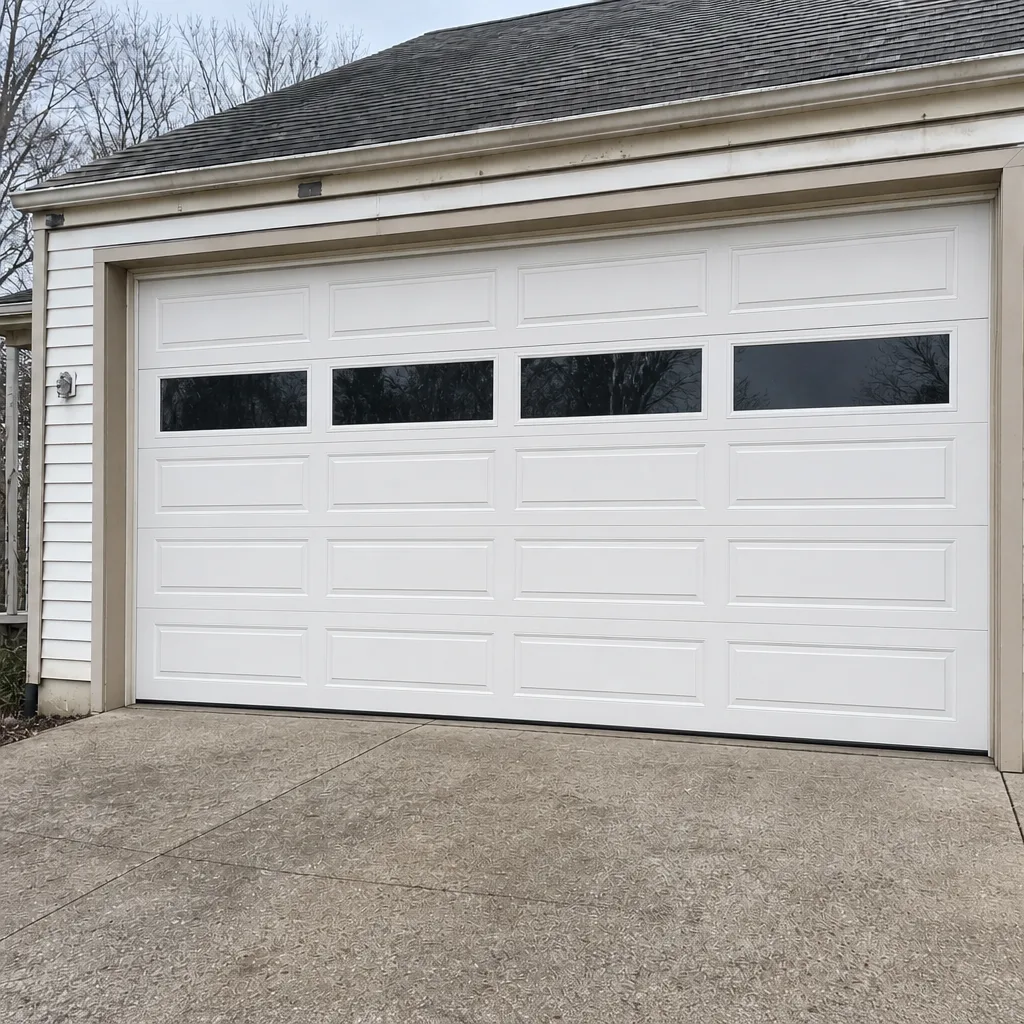
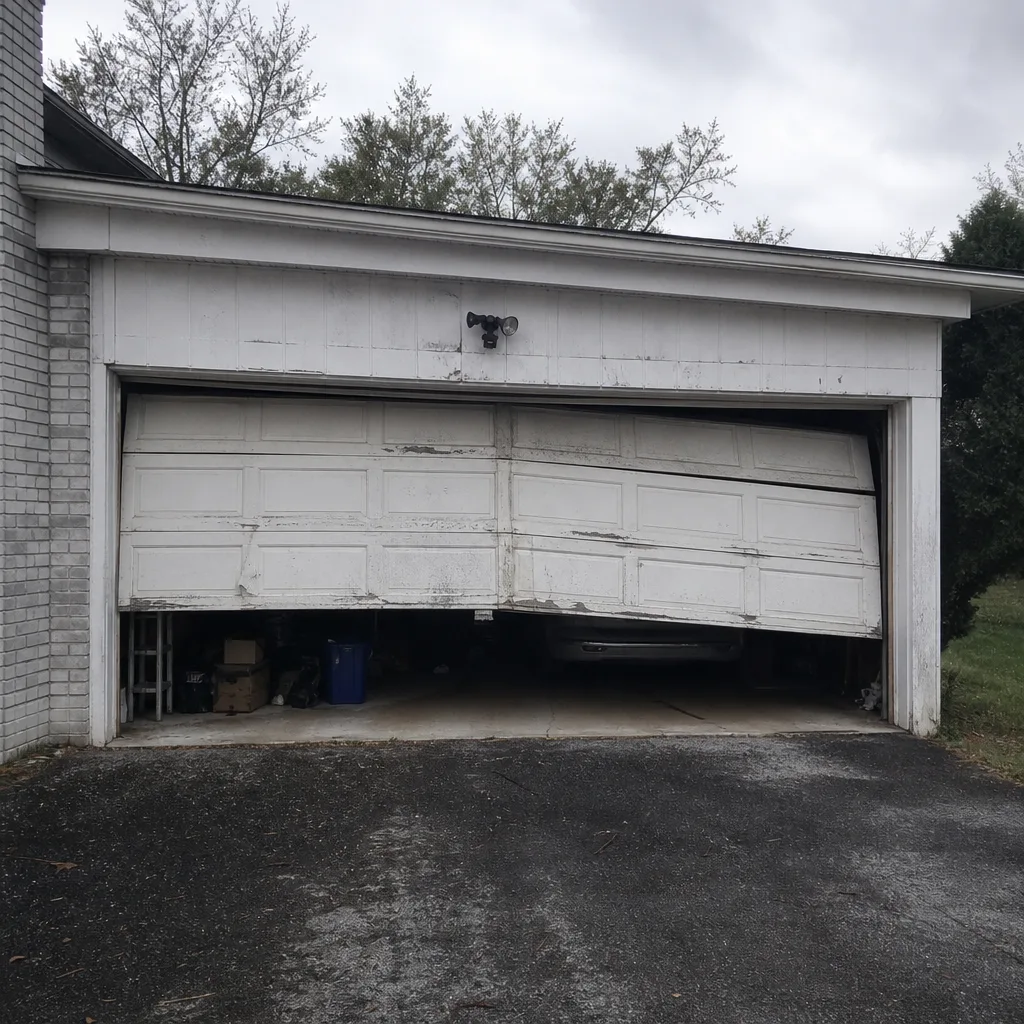
See the difference
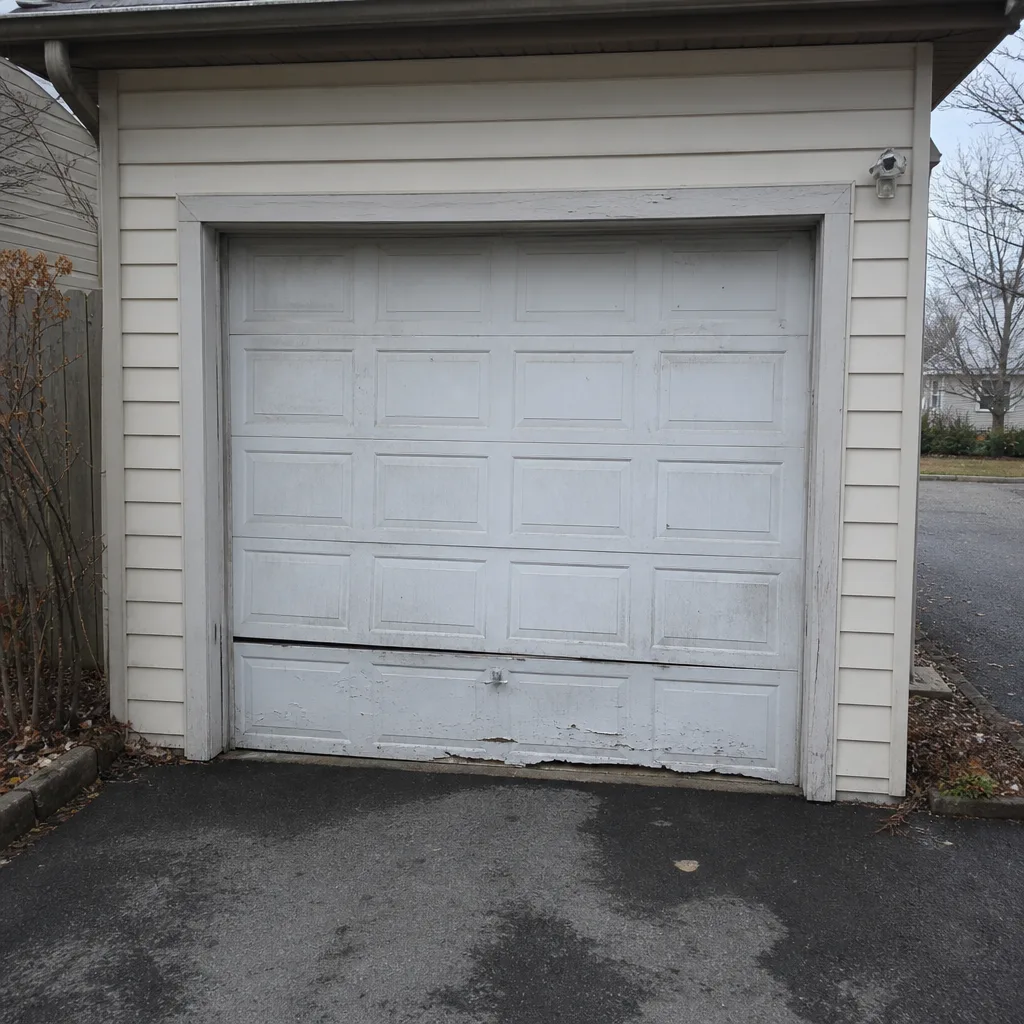 Before
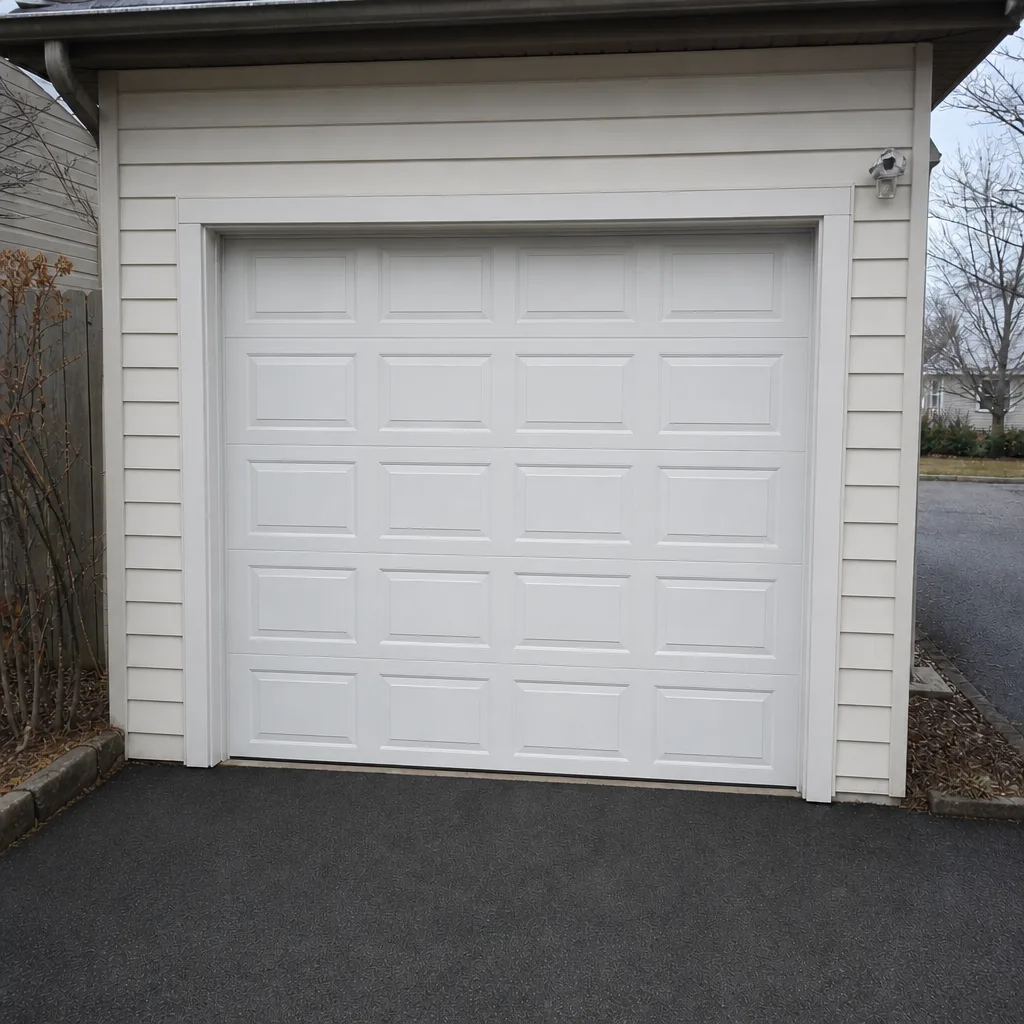 After
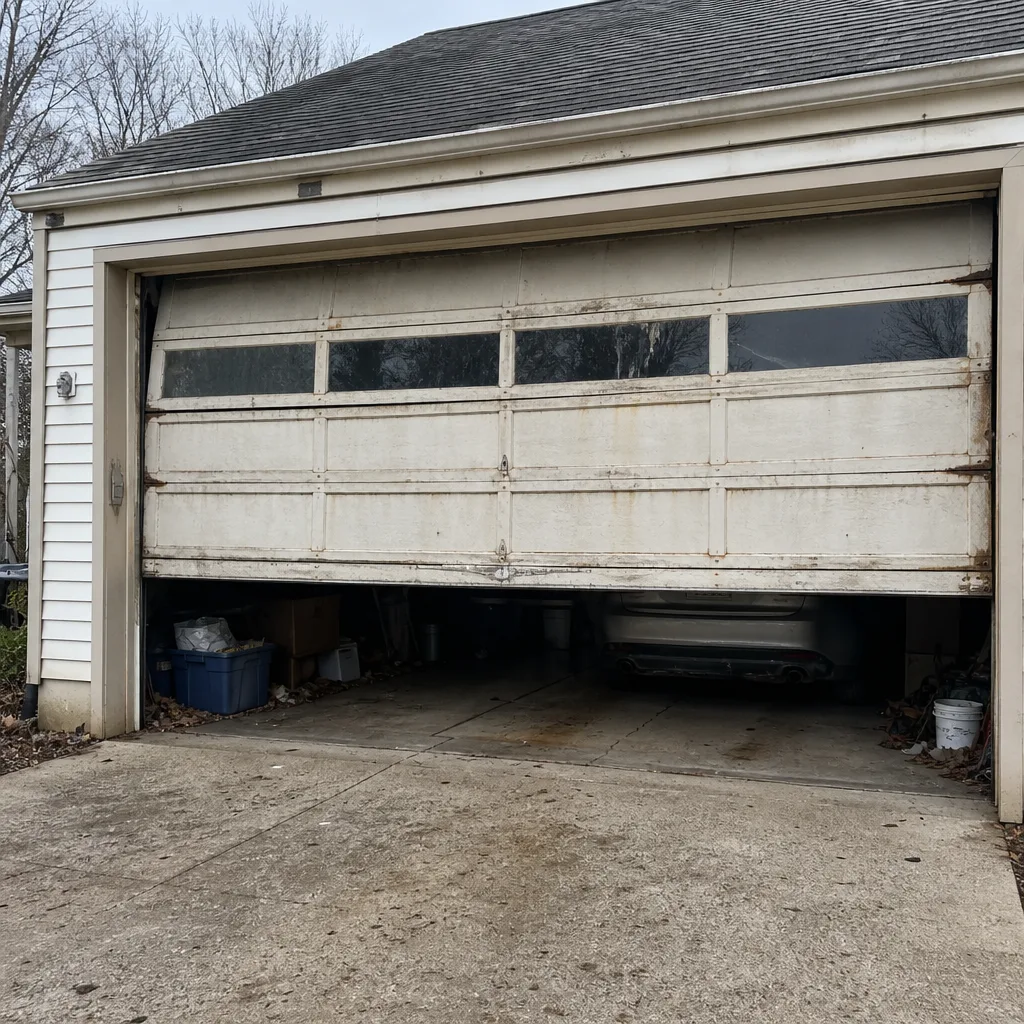 Before
 After
 Before
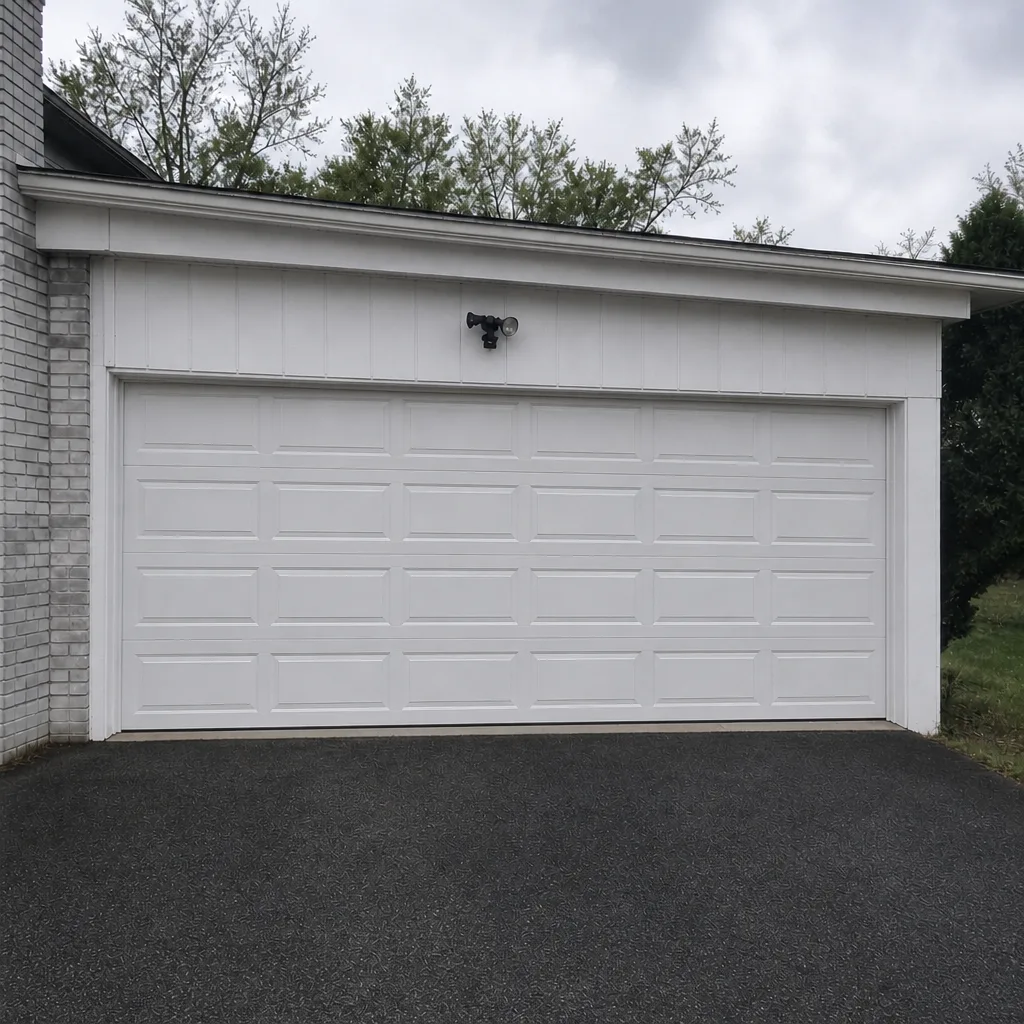 After
Common Mistakes to Avoid
- Using WD-40 on tracks and hinges. WD-40 is a solvent, not a lubricant. It strips existing grease and leaves the tracks dry. Use a garage-door-rated lubricant instead.
- Buying a “standard” spring online. Springs come rated by inside diameter, wire gauge, and length. A spring marked for a “standard seven-foot door” can be wrong for your door. The wrong spring either won’t lift the door or slams it shut.
- Skipping the door clamp before any spring work. This one is not a minor mistake. If the door isn’t clamped in place before tension is released, it can drop immediately. This is exactly why spring work belongs in a technician’s hands.
- Replacing one torsion spring instead of the pair. Matched springs are designed to fail at roughly the same age. If one has snapped, the other is usually close behind. Replacing one now means paying for a second service call in a few months.
- Ignoring a slow-lifting door for months. A door that lifts slowly is telling you the spring is losing tension or the opener is struggling. Waiting on it makes both repairs bigger.
- Assuming a Loudoun County permit isn’t required for a structural change. Swapping a door in an existing opening usually doesn’t need a permit. Cutting the header, widening the opening, or converting a wall to a garage door typically does. Call the building department before that project.
- Skipping a diagnostic when the opener won’t respond. Most “dead opener” calls in Leesburg turn out to be a safety beam, a power disconnect, or a broken spring the opener can’t push against – not a dead motor. A technician can diagnose in minutes what takes a homeowner hours.
When to Call a Professional
Call a professional when any of these are true: the door won’t lift or lower with the openers, the door is stuck halfway, a spring is visibly broken (a visible gap in the coil), a cable has snapped or gone slack, the door is crooked or off its tracks, the wood header above the door is cracked, rotted, or sagging, or the door has come down on a vehicle. Call for opener repair and diagnostics as well – the modern smart-home openers in many Loudoun homes behave differently from older mechanical units, and the fix is rarely “buy a new opener.”
Leesburg Garage Door Repair offers free estimates in Leesburg. Call (844) 427-1950. We answer 24/7. Fast dispatch from 7am to 7pm, Sunday through Friday, and emergency response for the failures that can’t wait.
Frequently Asked Questions
No. Torsion springs hold enough stored energy to cause fatal injuries when released improperly, and the winding-and-clamping process requires tools and experience most homeowners don’t have. Even experienced technicians treat spring replacement as one of the most dangerous jobs in the trade. Call a professional for any spring repair. For a free estimate, call (844) 427-1950.
Spring repair in Leesburg typically runs $180-$340 for a single spring, with a matched pair usually costing roughly twice that. The price depends on spring size, door weight, and whether the cables or rollers need attention at the same time. The written estimate sets the final price before work starts, so you’ll know the total in advance. Call (844) 427-1950 for an exact quote – estimates are free.
Yes. Sensor misalignment is the most common garage door problem and one of the few that’s genuinely safe to DIY. Clean both sensor lenses, check that the small LED on each is lit, and nudge the sensor bracket until the door reverses when you test it with an object. If the alignment won’t hold, a bracket or wire may be damaged and worth a professional look.
Most like-for-like garage door replacements in Leesburg and the wider Loudoun County area don’t require a permit. Structural changes – widening the opening, cutting the header, or installing a garage door in a wall opening – usually do. Call the Loudoun County building department before a structural garage door project starts. For routine repairs, a permit isn’t typically part of the conversation.
Many homeowner policies exclude damage caused by the homeowner’s own workmanship. If a DIY spring or cable repair fails and damages the door, opener, or a vehicle, the claim may be denied. Professional work avoids that problem and produces a paper trail that supports a claim if something goes wrong. Ask your insurer if you’re unsure how your specific policy handles this.
Yes. A door stuck open is a security problem and we treat it as an emergency. We answer 24/7. Fast dispatch from 7am to 7pm, Sunday through Friday. If a call comes outside dispatch hours, it’s booked into the next opening, Sunday through Friday, 7am to 7pm. Call (844) 427-1950 and we’ll get someone to your door as quickly as the schedule allows.
The Bottom Line
Garage door work isn’t a single category. Weatherstripping, lubrication, sensor alignment, and remote programming are safe, cheap, and genuinely worth doing yourself. Cables, rollers, and opener diagnostics sit in a middle zone where a homeowner with the right tools and patience can sometimes do the work, but mistakes get expensive fast. Torsion spring work, header assessment, and anything involving wound tension belongs in a trained technician’s hands, full stop. The safer and often cheaper path for a Leesburg homeowner is knowing which bucket a repair falls into before opening the toolbox.
If you’re not sure which bucket you’re in, or the door has already failed in a way you can’t fix, Leesburg Garage Door Repair is the call. We work on the door you have, not just the brands we happen to like. Call (844) 427-1950 for a free estimate. We answer 24/7. Fast dispatch from 7am to 7pm, Sunday through Friday, and emergency response when waiting isn’t an option.
Written by the team at Leesburg Garage Door Repair.