
Top Signs You Need Garage Door Service – Don’t Ignore These
A garage door that takes two seconds longer to open than it did six months ago isn’t just slow. That delay is the opener motor compensating for extra friction, and every cycle it spends pulling harder is a cycle it spends heating up its thermal overload protection. Most homeowners wait for a loud bang or a door that won’t budge. By then the small, cheap part has usually taken two or three expensive ones down with it. Here are the warning signs worth acting on early, and what each one is quietly doing to the rest of your door while you wait.
If you’d rather not climb a ladder and start guessing, call (844) 427-1950. We answer 24/7. Fast dispatch from 7am to 7pm, Sunday through Friday.
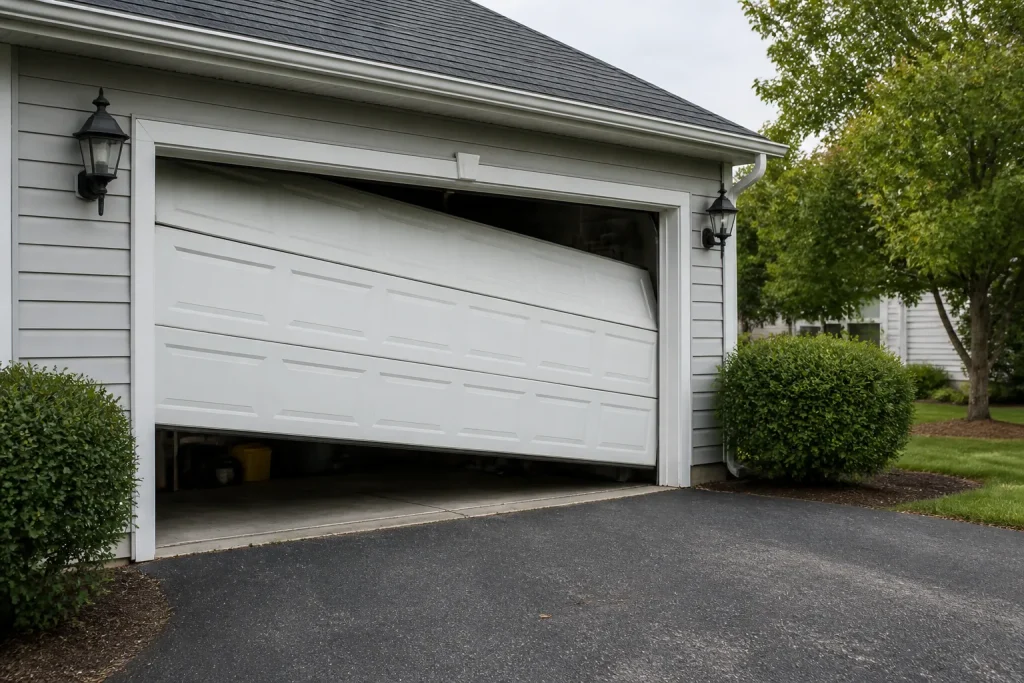
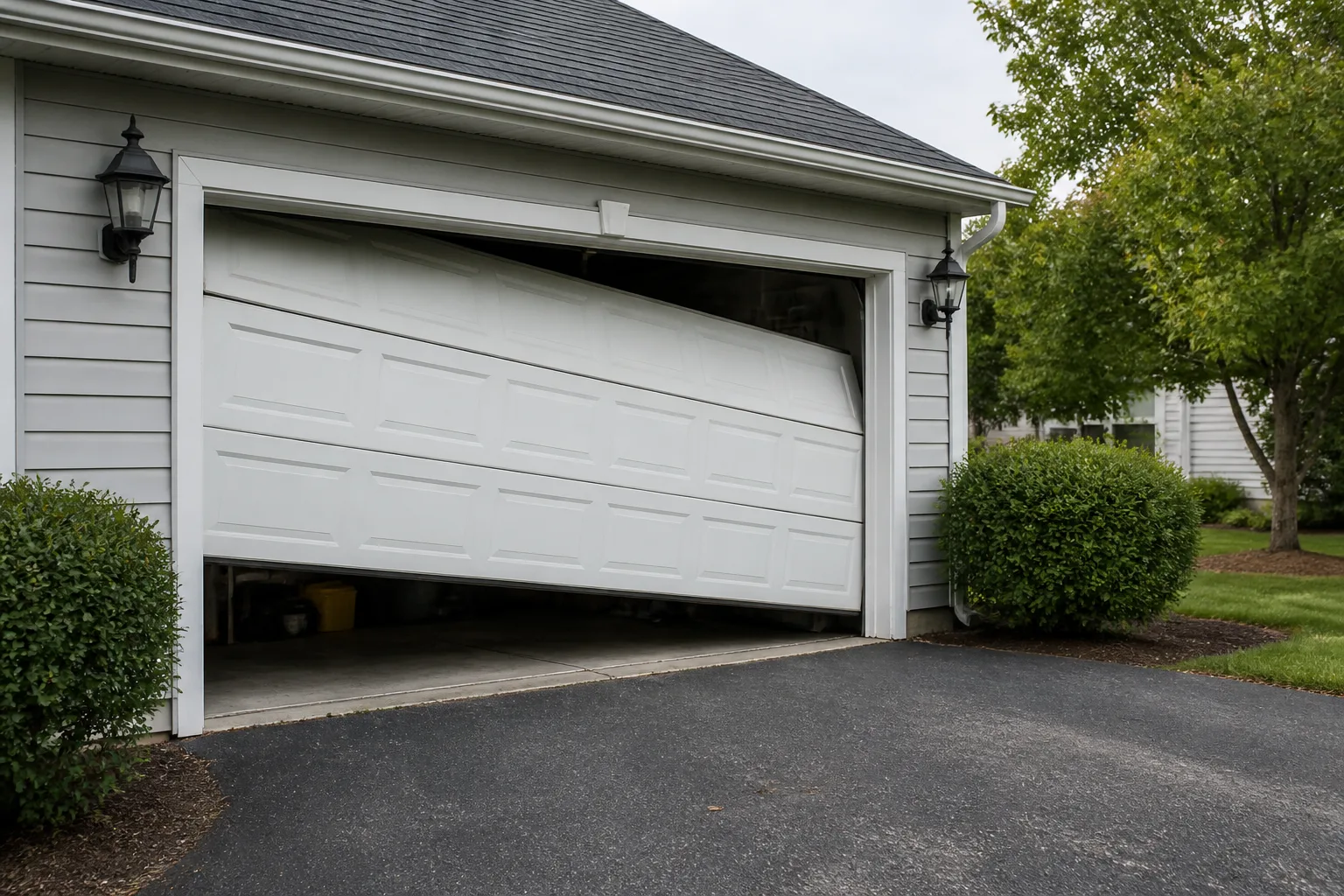
Key Takeaways
- Slow or labored movement means the opener is fighting friction, not that the motor is going bad first.
- One worn nylon roller can throw off cable drum tension and eventually warp the bottom bracket.
- A door that shakes on the way down is telling you which side is out of balance.
- A door that hesitates before reversing points to a close-limit switch, not a sensor – and that changes the repair.
- A door that binds only in January and July usually has a track that was shimmed wrong.
1. The Door Moves Slower or Louder Than It Used To
This is the first symptom most Leesburg homeowners notice, and it’s the one most often ignored. A door that groans, drags, or takes noticeably longer to travel isn’t aging gracefully. It’s telling you the mechanical load has gone up. Something in the system – rollers, hinges, the track, or a spring that’s lost tension – is resisting, and the opener is making up the difference.
That compensation has a cost. Openers are built to lift a door at a designed weight and resistance. When friction climbs, the motor draws more current and runs hotter on every single cycle. The thermal overload protection that keeps it from cooking itself starts tripping. At first it resets and you never notice. Eventually it stops resetting, and a motor that should have lasted years is replaced along with whatever caused the drag in the first place.
What to listen for:
- A grinding or scraping sound that wasn’t there before.
- A door that pauses partway up or down.
- The opener straining audibly at the start of travel.
- A door that no longer glides but lurches.
The fix is often small – lubricated moving parts, a worn roller, a track that’s out of alignment. Catching it at this stage is the difference between a routine service and a motor replacement. If the door on your garage is a Clopay or a Wayne Dalton and the movement has changed, it’s worth having it looked at before the opener takes the hit.
2. One Cheap Roller Can Take Out Expensive Parts
Most people picture a roller as a small, forgettable wheel. It is. That’s exactly why it gets ignored, and why a single worn nylon roller can start a chain reaction through the rest of the door.
When a roller seizes or wears flat, it doesn’t spin cleanly in the track anymore. It drags. That drag pulls unevenly on the cable on that side, which loads the cable drum out of balance. The drum is where the lifting force transfers from the torsion system to the cables, and it doesn’t like imbalance. Over time the uneven pull works its way down to the bottom bracket, the heavy steel piece that anchors the cable at the bottom corner of the door. A warped or stressed bottom bracket is a real problem, and it’s the kind of thing that turns a minor repair into a serious one.
What to check:
- Look at the rollers along each side. Any that are cracked, flat-spotted, or wobbling instead of spinning are done.
- Listen for a rhythmic click or thump as the door travels – that’s often one roller catching.
- Check the bottom corners of the door for any bending or stress at the bracket.
Replacing worn rollers is one of the least expensive things you can do to protect everything downstream. On a heavier insulated door, the load on each roller is higher, so wear shows up faster – an Amarr or Genie-equipped door carrying extra weight benefits from a roller check sooner rather than later.
3. The Door Shakes on the Way Down – Which Side to Look At First
A shaking door isn’t random. The direction and timing of the shake tell you where the imbalance lives. And the side to inspect first is almost always the side the door dips or tilts toward, because that’s the side carrying less support than it should.
Here’s the general pattern:
- Shakes most at the start of travel: the torsion spring on one side has lost tension, so the two sides aren’t lifting equally.
- Shakes as it approaches the floor: a cable on one side may be slack or a drum is winding unevenly.
- Shakes all the way through: a seized roller or a track that’s out of plumb, not a spring issue at all.
Look at the cable on the dipping side first. If it’s loose or kinked, stop using the door. A slack cable means the system has lost its tension and the door is being held by less than it should be. This is a hands-off situation – springs and cables are under extreme tension and are one of the most dangerous parts of the door to touch. A trained technician has the tools and the knowledge to release that tension safely. Getting this looked at promptly is what our garage door spring repair work is built around.
4. It Opens Fine but Hesitates Before Reversing – That’s the Limit Switch
This is the most misdiagnosed symptom on the whole door, and it’s the one most likely to inflate your repair bill if it’s guessed at wrong.
The photo-eye sensors at the bottom of the door do one job: they stop the door from closing on something in the way. The close-limit switch does a different job entirely – it tells the opener where the fully closed position is and controls the door’s downward travel and reversal behavior. When a door opens fine but hesitates or reverses early on the way down, that’s the close-limit switch telling the system the floor is higher than it actually is. It’s not a sensor problem.
Why the distinction matters for your wallet: a technician who assumes sensors will start replacing or realigning the photo-eyes and charge for a repair that doesn’t fix anything. A technician who recognizes the limit switch behavior adjusts or replaces the switch and the door closes correctly. Same symptom, very different repair, very different bill. If your door is running on a LiftMaster, Chamberlain, Genie, or Craftsman opener with smart-home integration, the limit settings are often adjustable through the app or the control panel – but the diagnosis still has to come first.
5. The Seasonal Warning Sign in Leesburg: Binds in January and July
Here’s one that trips up a lot of homeowners. The door binds in the coldest part of January and the hottest stretch of July, but runs smooth in the mild weeks of spring and fall. If that pattern sounds familiar, the springs aren’t the culprit. The steel track is.
Steel expands and contracts with temperature, and so does the structure the track is mounted to. When a track has been installed and shimmed improperly, the small gap between the track and the wall isn’t consistent from top to bottom. In mild weather the door stays within tolerance. In January the metal contracts and the track pinches slightly against the rollers on one side. In July it expands the other way and the same gap reveals a different bind. Same door, same problem, showing up twice a year.
The fix is a proper re-shim and re-level of the track. It’s detailed work, which is why it’s easy to cover up with a quick adjustment that lasts until the next cold snap. In this part of Northern Virginia the temperature swings are enough to expose a bad shim job every season, so a track that binds twice a year isn’t going to fix itself.
How to Run the Balance Test Before You Call
Before you call anyone, you can figure out at home whether the spring system is the problem. This tells you whether it’s a same-day call or something you can schedule a week out.
- Close the door and disconnect the opener using the manual release cord – this is usually a pull cord hanging from the trolley.
- Lift the door by hand to about halfway open and let go.
- Watch what it does.
What the result means:
- The door stays in place when you let go: the springs are balanced. Your issue is elsewhere – likely rollers, tracks, or the opener.
- The door drifts slowly down: springs have lost some tension. Worth scheduling, but usually not an emergency.
- The door drops fast or won’t stay up at all: a spring has failed or is nearly there. Call for same-day service – don’t keep running the door.
- The door won’t lift manually or feels extremely heavy: spring failure. Stop using the door and call.
Put the door back down, re-engage the opener, and you’ll know whether you’re facing a scheduled repair or an urgent one. A heavyset insulated door from a maker like Clopay or Amarr will feel heavier than a single-layer door in any case, so use the test as a balance check, not a measure of how strong you are.
When to Call a Pro
If the balance test shows a spring failure, if a cable is slack or kinked, if the door drops fast or won’t stay up – those are not DIY jobs. The springs and cables are under serious tension, and getting it wrong can cause real injury. We answer 24/7 for the times when a door fails and you can’t wait. Fast dispatch is 7am to 7pm, Sunday through Friday.
For everything else – noisy movement, a shaking door, a roller that’s dragging, a limit switch that needs adjusting, or a track that binds with the seasons – a regular scheduled visit does the job. Our technicians have up to 8 years of experience, and we work on any brand your door happens to be, whether it’s Genie, Clopay, Amarr, Wayne Dalton, LiftMaster, Chamberlain, Craftsman, or Raynor. We work on the door you have, not just the brands we happen to stock.
Related services in Leesburg: if you’ve narrowed it down to the door itself, our garage door repair handles worn rollers, cables, tracks, and brackets. If the motor or app integration is the issue, our garage door opener repair covers both legacy openers and Wi-Fi and app-connected systems.
The Bottom Line
Most garage door failures don’t start with a bang. They start with a door that’s a little slower, a little noisier, or a little shakier than it used to be, and a motor that’s been quietly compensating for it. Catch the signs at the roller-and-track stage and you avoid the spring-and-bracket stage. Ignore them, and the cheap parts take the expensive ones with them.
If you’re in Leesburg and need help, Leesburg Garage Door Repair offers free estimates – call (844) 427-1950. We answer 24/7. Fast dispatch from 7am to 7pm, Sunday through Friday. Every price is quoted and agreed in writing before any work starts, so you’ll know what you’re paying before we touch the door. You can also start at our Leesburg Garage Door Repair page for the full picture of what we handle.
Frequently Asked Questions
What are the first signs you need garage door repair?
The earliest signs are a door that’s slower or louder than it used to be, a door that shakes during travel, and an opener that strains at the start of each cycle. Any of these means friction or imbalance has climbed and the motor is compensating. Call (844) 427-1950 to get it looked at – estimates are free.
Can I replace the rollers myself?
Rollers are one of the lower-risk parts to swap if the door is fully closed and the springs are balanced, but anything involving springs, cables, or drums is not a DIY job. The tension in those parts can cause serious injury. When in doubt, have a technician do it. Call (844) 427-1950 for a quote.
Why does my garage door shake on the way down?
Shaking on the way down usually means the two sides aren’t lifting evenly – a spring that’s lost tension on one side, a slack cable, or a seized roller or track. Look at the side the door dips toward first. If you see a slack or kinked cable, stop using the door and call (844) 427-1950.
How do I know if it’s the springs or the opener?
Run the manual balance test: disconnect the opener, lift the door halfway, and let go. If it drifts down or drops, the springs are the issue. If it holds but the opener still struggles, the problem is in the door’s moving parts or the opener itself. Either way, call (844) 427-1950 for a free estimate.
Written by the team at Leesburg Garage Door Repair.
Written by the team at Leesburg Garage Door Repair.
Need Garage Door Help?
Call Leesburg Garage Door Repair - the local pro we connect you with is licensed and insured, here with fast help in Leesburg.
(844) 427-1950